Home Blog Page 90

KEBS Suspends Licenses of 369 Water Bottling Firms

0

The Kenya Bureau of Standards (Kebs) has suspended the licenses of 369 water-bottling companies for non-compliance with quality standards.

KEBS CEO Charles Ongwae warned other water bottlers that they risk losing their licenses if they fail to meet the set standards.

The move follows the rise of counterfeit substandard bottled water products that pose a risk to human health.

According to Kebs, there are 600 registered water-bottling firms in the country.

The Kebs boss made the announcement Wednesday during a crisis meeting with representatives of water-bottling companies.

The meeting was held to address the rise of counterfeit products that are posing health risks to consumers.

A recent World Bank/IFC study detailing the bottled-water market in Kenya estimated sales at Sh12 billion per year.

According to the Kenya Revenue Authority (KRA), over 60 per cent of water and juice products in the market are counterfeit.

KRA Commissioner-General John Njiraini said last month that the illegal trade was denying the country billions of shillings in revenue.

“The water and juices sector is one of the fastest growing industries in the country, but statistics indicate that over 60 per cent of the water and juices are illicit,” he said.

10 Good Reasons to Use Coconut Oil

0

Coconut oil is found everywhere today: In the kitchen, the beauty shelf and in the bedroom. The oil has been one of the major players within beauty – and it is not without reason.

The oil can with its content of vitamins, minerals and antioxidants namely do wonders for both your skin and hair – whether you have dry, fine, curly, damaged or frizzy hair, or if your skin is dry, oily or normal.

We have summarized 10 good reasons why you can safely let the coconut oil move into the bathroom … and the bedroom.

  1. Makeup remover. Coconut oil is great as a makeup remover, and it dissolves all – even waterproof mascara. Just dab coconut oil on some cotton wool and wipe onto your skin, and voila – all makeup is removed!
  2. Hair mask. Coconut oil may bring life back into even the saddest strain of hairs. Massage the oil well into the hair and scalp. Wrap hair in a towel, a shower cap, plastic film or bag and allow the oil to work a few hours or overnight. Then massage shampoo into your hair before you wash the oil out, to avoid that your hair becomes greasy. Wash hair once again and rinse thoroughly.
  3. Moisturize. Moisten your skin with coconut oil and you get nice, shiny arms and legs. And yes, it can become a little greasy affair if you use too much. Therefore, be careful when dosing.
  4. Dry and cracked feet and hands. Fight the dry skin on the hands and feet by lubricating your dry elbows and hands with coconut oil.
  5. Towards sunburn. Give first aid for your sun-burnt skin with coconut oil, which are healing and dissipates heat.
  6. Lip balm. The dry, chapped lips do not have a chance when you give them a some coconut oil! Buy possibly a small box where you can put a little oil, then you can carry your new lip balm with you in the bag.
  7. Shaving cream. Tired of expensive shaving cream? Let coconut replace shaving cream when you shave your legs, or other more intimate parts of your body. Coconut oil is both cheaper, antibacterial and combats the small irritation buds, and moisturize the skin. Win-win-win situation!
  8. Massage Oil. Take the oil with you in the bedroom, and treat your partner with a nice massage!
  9. Hair oil. Rub a tiny lop of coconut oil of the size of a pea in your hands to warm it up. Then add the oil in your hair, and it becomes shiny and soft and will shine as the sun. Bonus: If you have large, curly hair, oil also goes in and tames curls!
    Tip! Coconut oil is very economical in use, so be careful when dosing!
  10. Bodyscrub. Mix half a cup of salt, or sugar with an equivalent amount of melted coconut oil and you have a homemade scrub that moisturizes and removes dead skin cells. The result is unmistakable: a nice, soft skin.

Tip! If you have areas where your skin is a little extra dry – for example, your feet and elbows – you can add a little more salt or sugar

Tip! Coconut oil can be melted over a water bath or in a microwave.

Are not you loving the smell of coconut? So choose a fragrance and taste-free variant – you can also spice up the scent with a few drops of ethereal oils.

Lenders in Need of Bail-out Cash Given Strict Central Bank Rules

0

The Central Bank has set tough conditions for the money it has offered to bail out banks facing liquidity pressures as a result of Chase Bank’s closure last week.

The interest-free cash, which will be extended for between seven days to four weeks, will only be given to banks facing pressures that are not of their making.

“This is not a loan, credit or a bailout. It is interest-free but CBK will be all over you if you are provided with this support,” the Central Bank of Kenya (CBK) Governor Patrick Njoroge told journalists on Friday.

Banks will be required to present an action plan for getting out of their financial woes including re-establishing lines of credit with other lenders.

They will also be required to reorganise assets, consolidate their investments and even present proposals for raising more cash from debt, equity and shareholders.

The CBK boss said banks wishing to access the money will even have to go slow on lending and sell their foreign currency to raise capital.

After receiving the money, the banks will be forced to submit daily and weekly reports to the regulator and will be subject to targeted inspection “every so often”.

“They must come up with an action plan, this is not a tap or an ATM,” he said.

The CBK governor said the measure is a new way of dealing with situations such as the one that Chase Bank faced.

Dr Njoroge said some of the lenders, including the big ones, have approached him to understand how the funds will be issued.

He however did not disclose the number of banks which have applied for the cash or even the amount CBK had already disbursed.

The Central Bank has other tools to support banks including overnight lending, the discount window such as buying back securities from lenders to release money into the banking system through reverse repos transactions.

The governor said the framework will help banks which do not even have the securities to trade and are struggling for funding on the interbank market as a result of the Chase Bank contagion which may have seen financial institutions lend less to each other.

Last week, CBK also extended the window for reverse repos by increasing the time it will hold securities from banks from one week to a month.

Rwanda Tops East Africa’s Adventure Destinations

0

Rwanda tops Africa’s best adventure destination for 2016 with its decade treasure well conserved attractions the mountain gorillas. Today Rwanda the smallest country in East Africa has become the finest destination not only for travel but also business attracting hundreds of foreign investors worldwide .The US A business delegates, hotel investors and many other have chosen Rwanda as best out of all the African countries.

Tour operators have introduced new Rwanda safari itineraries with many focusing exclusively on the country’s main attractions, the mountain gorillas in Volcanoes National Park plus other new adventures. There is a vast range of quality adventure activities on offer in this charming beautiful and friendly country in the East Africa region. The great opportunity of exploring the magnificent and varied attractions of Rwanda, which experiencing its rich culture is what draws millions to the country every year.

Rwanda tour operators have designed several new tour adventures with special emphasis on culture and natural beauty and the tourist interest exceeded their expectations. Many foreign tourists to Rwanda for Rwanda safaris enjoy seeing mountain gorillas in the wild, watch birds, view wildlife, hike the volcanoes, track chimps & golden monkeys as well as exploring the countries culture and the friendly people well being. Among the many trips done in Rwanda each day Rwanda gorilla tracking tours rank best with 99% interest every year, followed by chimpanzee tracking and golden monkey with 80% and hiking the volcanoes with 70% plus birding and wildlife viewing.

The shortest Rwanda gorilla safari goes for 1 day, followed by a 3 day gorilla tracking tours. Those with more time like heading out for Rwanda gorillas and chimpanzee tracking safari from 5-7 days. Discovering Rwanda beautiful attraction isn’t only for Rwanda tourists but also for business travelers as wells as locals and foreign investors. Rwanda as a country has all it takes for one to have a fabulous Africa holiday so its time and the time is now to start planning for a Rwanda tour holiday.

Rwanda safaris include Budget & camping tours, luxury tours as well as midrange tours. This is because travelers to the country spend differently depending on their interest and reason of travel. Big spender travelers require exclusive luxury Africa holidays while other spends moderately and other love adventuring on a tight budget. In addition to Rwanda adventures, the hotel industry is also growing day by day near different attractions in order to cater or the increasing travel demand of travelers to the country of all kinds. Lodges cater for all budgets according to the traveler’s interest and budget.

Already on offer are Rwanda advanced travel trend and quality services which specialists believe will inspire more travelers to the country not only in 2016 but even after .Besides there are also itineraries which call for multiple cross boarder adventures especially to Rwanda and Congo and Rwanda and Uganda giving travelers a chance to also explore other neighboring countries and have several amazing stories and memories to keep and tell others. As you know Uganda and Democratic Republic of Congo are one of the lucky countries with the world remaining mountain gorilla population which shared with only Rwanda in the region. Besides one can view wildlife, track gorillas and chimps, take boat rides, Hot Balloon safaris as well as engage in other adventures which will make your stay more outstanding. Above all Rwanda become the most exclusive gorilla tracking destination because it offers travelers a unique chance to track manageable gorilla families as well as easy hiking grounds for those travelers who can walk but not too fit.

Highlights of a Rwanda Trip include coming face to face with Mountain gorillas, chimpanzees, golden monkeys, and other 13primate species. Enjoying a warm hospitality of the Rwanda people from hotels to communities boost the countries culture and love for people every day. Elephants, giraffes, Lions, Antelopes, Buffaloes also wait for you at Akagera Rwanda’s birding paradise and a wildlife haven. The Rwanda amazing views is something which you will fall in love with at first sight following other attractions. Tour operators and driver guides are well informed and organized offering affordable Rwanda trips to all Rwanda travelers year round. The local belief of locals about some rocks and water falls is too interesting .But there is also a wide variety of local Art, crafts in the markets and village community retail shops please make it a point to stop by and take one home as a souvenir in memory of Africa and Rwanda in particular.

Kenyan passports to be phased out next year, to adopt East Africa travel permit

0

Kenya will phase out issuance of its national passports from next year and adopt the East Africa travel permit in the quest by the six countries to harmonize business and regulatory processes.

The phase-out period will last two years and the six countries including South Sudan that was this week admitted to the East Africa Community (EAC) expected to only issue the regional e-passport by the start of 2019.

The EAC e-passport launched Wednesday during the Heads of state summit is expected to have additional security features to protect against identity theft and data skimming.

The regional passport comes as the EAC countries of Kenya, Tanzania, Uganda, Rwanda and Burundi, which have already signed a common market and a single customs union, move to progressively converge their currencies and increase commerce.

“The EAC Heads of State launched the new international East African e-passport and directed that commencement of issuance of the EA e-passport takes effect from January 1, 2017; and implement the phase out program for the current East African and national passports from January 1, 2017 to December 31, 2018,” said a joint communique issued at the end of the summit.

The presidents further instructed that the six partner states undertake programs to create awareness of the new passports internationally.

This will see regional authorities start writing to different international bodies to ensure that it is a recognized travel document worldwide. The passports were to be launched in October last year but this was postponed.

The e-passport will have an electronic chip that holds the same information in the biometric form as that printed on the passport’s bio data page, including the holder’s name, date of birth, passport number and what the holder does for a living, among other things.

It will also contain a biometric identifier, a digital photograph of the holder and security features to prevent unauthorized reading or scanning, which will in turn reduce cases of forgery.

Jakaya Kikwete attacks rivals

0
Jakaya Kikwete

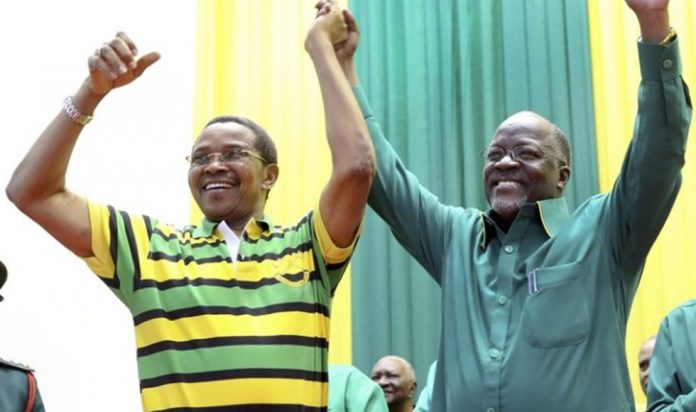
President Jakaya Kikwete emerged from the closet of inertia amid the ongoing pre-election saga yesterday to sling mud on his political rivals in a style typical of an incumbent he was 10 years ago.

But he was addressing the audience of workers in the ministry of works, led by his anticipated successor Dr John Magufuli, who had invited to bid him farewell.

The outgoing president branded activities ahead of the October General elections within Ukawa, a coalition of four political parties in the opposition, as mere ‘house of cards syndrome’ apparently with a short life span.

In an obvious punitive remark addressed to a politician he avoided to mention, Kikwete said “one does not become President through self-imposed will, but God’s, and that the president does not compete with his minister.”

“I really wonder why and how one could boast oneself of an illusion that nothing could be done without him.

How can a minister forget that he became one because he was appointed by the President. It is the very President who placed him where he is,” Kikwete said.

“After all, you don’t have to carry a load of degrees to become President, but good organizational skills to lead your team into meeting the planned goals,” he said.

He called upon Tanzanians to support his successor, saying that he will be in charge of accomplishing what would be left by him.

In what appeared an advice to his successor, the President insisted on the need to load the Ministry of Works with budget funds saying the ministry was an engine of the national economy.

He said without putting emphasis on the development of infrastructure the national economy will remain paralysed.

Earlier in the farewell event Dr Magufuli had boasted of having achieved to connect all regions in the country with tarmac roads in his 15 year tenure as Minister of Works.

He said that in 2014 alone the Road Fund had its wallet swollen to Sh866.63bn from Sh73.08bn previous year.

The Chief Executive for Tanzania National Roads Agency (TANROADS) Patrick Mfugale told Kikwete that his agency has built more than 5,000 kilometers of tarmac road in the country in the past 10 years, pledging to finish the network of tarmac roads across the country by 2018 against the current 86 per cent of the work done.

Tanzania Building Agency (TBA) also under Dr Magufuli’s custodianship revealed to have built 1,732 staff houses and that 7,000 have been sold to the public in the past 10 years.

The Ministry of Work and its Agency such as Tanroads, TBA, Road Fund, The Tanzania Electrical, Mechanical and Services Agency (TEMESA) , Engineers Registration Board and Architectures offered President Kikwete a gift of a tractor and a truck with a number of harvesting machines.

He said he will go back to his village to deal with agriculture following retirement come October.

However, Dr Magufuli could not do without waging a covert presidential campaign before his ministerial subordinates and a man whose blessings were a pre-requisite.

Tanzanian Police use teargas on Lowassa supporters in Arusha

0

Tasking the government and especially the police force in the International Criminal Court was mooted by presidential opposition contender Edward Lowassa here yesterday.

The former premier talked for only five minutes to thousands of supporters waiting for him at Tindiga grounds in easterly outskirts of this emerging city at Kimandolu, where he said indictment of individuals was possible as happened in the case of Kenyan political heavyweights Uhuru Kenyatta and William Ruto.

He made references to the condition of the now stalled General Tyre Co. as well as congestion of vehicles in the new city, while reiterating that he would look for ways to apply the law machinery to review the case of life imprisonment of famous musician Nguza Viking or ‘Babu Seya’ and his son Johnson Nguza alias ‘Papii Kocha.’

The former premier said he was going to address the myriad of challenges facing residents of Arusha region when the proper campaigns start, listing among such issues small miners’ problems, their loans and repayments, tourism and contentions of wildlife, livestock and farmers, teachers’ problems and conflicts of farmers and livestock keepers.

In the background, police tear-gassed the Chadema presidential candidate as arrived in the region to seek sponsors.

The bombing incident arose from massing of vehicles as people flocked to a rally at the Tindigani-Kimandolu grounds, obstructed traffic along the tourist city’s roads leading to the grounds as well in connecting with the main part of the city.

Thousands of supporters, some in cars and motorbikes, turned up from the Kilimanjaro International Airport, thronging the road leading to Arusha and to Kimandolu grounds.

It is estimated that 500 cars were involved in the reception, blocking traffic and making it difficult for police to direct vehicle flow, thus police resorted to use teargas on recalcitrant motorists pushing their vehicles in the blocked direction.

A stretch from Chama area along the Moshi-Arusha highway and the proper tourist spots entrance points in the city was the knot of the pandemonium as teargas rained on supporters and many abandoned their cars, making Nduruma Bridge impassable for about three hours.

Lowassa’s motorcade that was using both lanes of the road was also brought to a stop on arriving at Chama area before riot police cleared the way for it to pass by teargassing the thronging crowd and vehicle drivers.

This newspaper witnessed anti-riot police firing teargas canisters in the air to disperse supporters.

Some police officers carried sub-machine guns. Lowassa was frequently stopped on the way by crowds who wanted to greet him as his motorcade drove to the tourist city.

He made stopovers at King’ori, Kikatiti, Maji ya Chai, Usa River and Tengeru before he was stopped by police who wanted to clear the way for him by teargassing his own supporters who had blocked the road.

Lowassa’s visit to Arusha yesterday saw former Minister for Home Affairs Lawrence Masha defect to Chadema along with several other CCM cadres.

Others who ditched CCM include former parliamentary aspirant for Arumeru East Constituency Sioi Sumary, Arusha CCM regional secretary Isack Joseph and CCM’s Women Wing chairpersons for Siha and Karatu districts. Their names were not immediately established.

Others who defected to Chadema yesterday are Arusha regional UVCCM chairman Robson Metinyiku, Arusha regional chairman Yona Nko and other Simanjiro CCM leaders.

Masha volunteered a word to the media, saying he had made tough but right decisions. Former Kahama MP James Lembeli who also defected to the opposition said what is happening now is unavoidable.

Former Shinyanga CCM regional chairman John Mgeja said he joined the opposition not for his personal interest but for the wider national interest.

Chinese govt to build high speed railway for Tanzania

0

The Chinese government plans to construct in the future high speed railway in Tanzania and other priority business partner countries as a way of bolstering economic relations with them.

The plan was revealed in Beijing recently by the Director-General of China Centre for Urban Development, Li Tie while briefing Tanzanian women journalists on the benefits of the long-standing economic ties between the two countries, future general outlook and new strategies to enhance these relations.

Lie noted that the project would be part of China’s Belt and Road Initiative that is championed by China’s President Xi Jinping in October this year.

President Xi raised the initiative of jointly building the Silk Road Economic Belt and the 21st century Maritime Silk Road aimed at promoting the connectivity of Asian, European and African continents and their adjacent seas establish and strengthen partnerships among the countries along the Belt and Road.

Director Lie said: “China’s economy is closely connected with the world economy. China will stay committed to the basic policy of opening-up, building a new pattern of all round opening-up and integrate itself deeper into the world economic system.

He added: “The Belt and Road cooperation features mutual respect and trust, mutual benefits and win-win cooperation, and mutual learning between civilisations. As long as countries along the belt make concerted efforts to pursue our cannon goal, there will be bright prospects for the countries along the Belt and Road.

Meanwhile, the director urged Tanzania to fully exploit the potentials of the Bagamoyo port that is currently under construction by a Chinese firm.

He said the project would highly boost the East African country’s economy as traders from across the region would easily import and export goods to and from the port.
Meanwhile, the Chinese minister for foreign affairs has underscored that the establishment of Chinese companies in Tanzania has generated many jobs since 2005. According to Li, there were over 500 Chinese companies operating in Tanzania in 2014 with USD800 investment.

He said the companies have provided direct employment to 150,000 Tanzanians.
China and Tanzania’s economic relations date back to the 70s where China built the Tanzania Zambia Railway (Tazara) which is still functioning todate. Since then China has made significant number of investments including the recent oil and gas transporting project in the East African nation and have maintained strong business ties for nanny years.

China invested over USD120bn in Africa in 2014 and at present it has injected USD15bn in Tanzania.

China’s mainly imports are energy and minerals from Tanzania while it exports clothes, machinery, technology, hardware, among other things.

Jubilation in Africa: The world’s first malaria vaccine approved

0
New Vaccine Against Malaria

Scientists across Africa are celebrating the news that the world’s first vaccine against malaria has been approved by the European Medicines Agency.

The vaccine, named Mosquirix, was given the green light on Friday after more than 30 years of research, detailed in 230,000 pages of data. It now means that the vaccine will be examined by the World Health Organisation and, if approved, could be administered to children across Africa within the next few years.

“It’s massively significant,” said Allan Pamba, vice president for pharmaceuticals in East Africa for GlaxoSmithKline (GSK), which has spent more than $356 million (£230m) to date on finding a vaccine. GSK expects to invest a further $200 to $250 million until development is completed. In January 2001, GSK and PATH Malaria Vaccine Initiative, with grant monies from the Bill & Melinda Gates Foundation to PATH, entered into a public-private partnership to develop a vaccine. PATH has invested more than $200 million, much of it from the Gateses.

“Malaria has been incredibly difficult to crack. It’s been tremendously frustrating. But we are all immensely proud to have reached this milestone.”

The WHO has said it may give a policy recommendation by the end of the year; African authorities will then take their decisions about how and where they would implement a vaccination programme.

But, given that an estimated 600,000 people die from malaria every year – 90 per cent in sub-Saharan Africa – Dr Pamba said the health ministers he spoke to on a regular basis were eagerly awaiting the arrival of a vaccine.

An important piece of the puzzle
The Company’s clinical studies with the vaccine shows that it can reduce disease incidence among young children by between 27 and 46 percent, but it does not protect completely against malaria, which mainly affects babies and small children in the poorest countries in Africa.

Subsequently, the African authorities decide how they will implement the vaccination program.

Michael Theisen, who researches malaria at the Danish State Serum Institute, calls it great news, since the vaccine will save lives and improve health in Africa.
– It is really a great thing, because we have never had a vaccine before against malaria. It has been studied in very many trials and is proven to have great effect.

Some other natural medications against malaria.
Research to develop antimalarial drugs led to the discovery of artemisinin, which is extracted from Artemisia annua, a herb traditionally used as a fever treatment. While most TCM herbs are boiled at high temperature that can damage the active ingredient in Artemisia annua, one traditional source says that this herb is to be steeped in cold water; knowing this, scientists found that a better extract was obtained by using a low-temperature ether-based extraction method, and by adding detoxification and purification processes, they could create a drug with sufficient active ingredient to be effective.

Licorice Root

Researchers at the Danish University Hospital and Pharmaceutical College have found that Chinese licorice root contains substances that have activity against malaria parasites that has become resistant to a number of means. One of the active substances is a relatively simple aromatic compound licochalcon A.

It is not recommended that you simply fill with liquorice, when traveling in the tropics, as liquorice also contains a substance glycyrrhizin, which causes high blood pressure. Glycyrhizin is an acetal, wherein the OH group in the glycyrrhetinic acid has formed acetal of a carbohydrate.

As for myself as a write i have used the licorice root to chew it and also close friends that used to suffer from Malaria started chewing it, and got rid of the malaria. today i do not chew it anymore, but i have never contracted malaria.

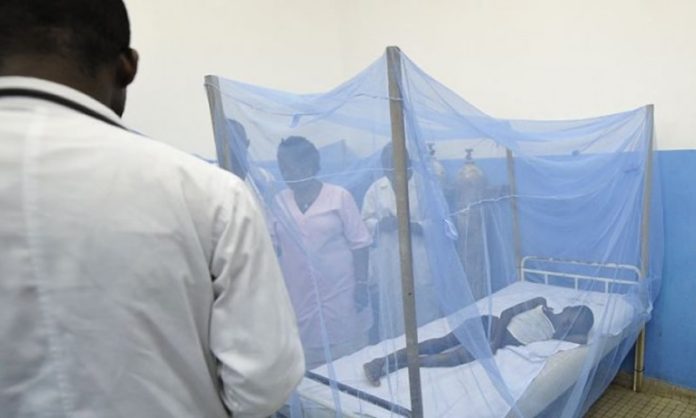
The number of deaths caused by malaria has declined in recent years thanks to the spread of mosquito nets and medication, but an effective vaccine can be an important corner piece of the puzzle.

The vaccine is designed to prevent malaria caused by Plasmodium falciparum parasite.
It is the first vaccine which counteracts the effects of a parasite.

The vaccine will prevent the parasite from infect and replicate in the liver, the parasite would then re-enter the blood stream and infect the red blood cells, leading to the disease symptoms.

A really good start

Michael Theisen call it a really good start, but also emphasized that there is still a long way and that the puzzle is far from being completed finished.

– It is a really good start, and then you have to say that here we have for the first time something that works, and so shall it be used in combination with something else. It may be mosquito nets, it can be general economic growth, which we know is good for fighting diseases, says Michael Theisen.

GlaxoSmithKline has promised that the company will not make money on selling Mosquirix. It must be sold at cost price plus five percent to be invested in continued research into malaria.

“Pretty much every health minister I speak to has had malaria,” said Dr Pamba, who was born in Kenya and now works between Nairobi and London. “They all want to know when it will be ready.”

Mosquirix, whose scientific name is “RTS,S” has been designed to prevent malaria caused by the Plasmodium falciparum parasite, which is most prevalent in sub-Saharan Africa. It is the first vaccine to be developed which counters the effects of a parasite.

The vaccine is designed to prevent the parasite from infecting, maturing and multiplying in the liver, after which time the parasite would re-enter the bloodstream and infect red blood cells, leading to disease symptoms.

The developers carried out a trial program involving more than 16,000 young children, conducted by 13 African research centres in eight African countries – Burkina Faso, Gabon, Ghana, Kenya, Malawi, Mozambique, Nigeria, and Tanzania.

Two groups of children were tested: infants aged from six to 12 weeks, and young children aged five to 17 months.

Data from the trial program demonstrate that over the first 18 months following three doses of RTS,S, malaria cases were reduced by almost half in the older group. With infants, cases dropped by 27 per cent.

Sir Andrew Witty, CEO of GSK, said: “Today’s scientific opinion represents a further important step towards making available for young children the world’s first malaria vaccine.

“While RTS,S on its own is not the complete answer to malaria, its use alongside those interventions currently available such as bed nets and insecticides, would provide a very meaningful contribution to controlling the impact of malaria on children in those African communities that need it the most.”
After a Clean Kill, African Game-hunters Defend the Right to Shoot

0
Adri Kitshoff

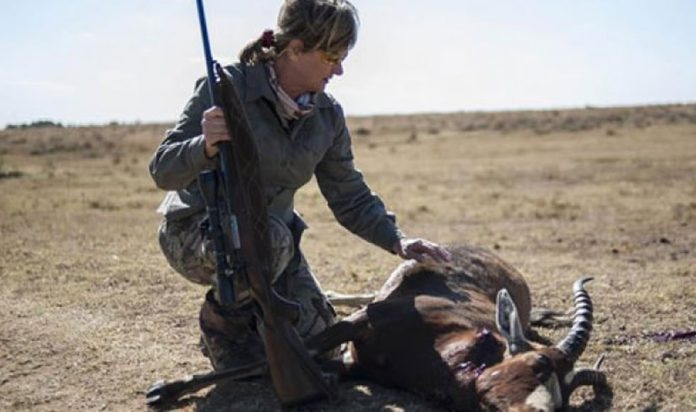
Adri Kitshoff aims her gun at the antelope and pulls the trigger. Killed in an instant, the animal collapses to the ground.

The hunter rests her chin on the gun and closes her eyes in a silent prayer of thanks that the animal did not suffer.

Kitshoff, 57, has shot many such animals before but, as she goes to the corpse, her hands begin to tremble.

“If I would ever become blasé when I’ve taken an animal, that day would be my last day hunting,” said Kitshoff, stroking the dead blesbok’s white face and brown coat.

Kitshoff, director of PHASA, the professional hunters association of South Africa, knows that not everyone shares her passion for hunting.

Yet she is determined to prove that hunters in South Africa are an integral part of conservation efforts.

Her argument is a simple one — hunters come to PHASA from all over the world willing to pay tens of thousands of dollars to track and kill buffalo, lion and elephants in African countries where trophy hunting is legal. These hunters pay big money in order to hunt.

A 20-day lion hunt, for example, can cost 80,000 euros ($90,000) to 130,000 euros.

Some of the money goes back into the reserves, in what hunters describe as a virtuous cycle that enables people to maintain large tracts of land where animals can roam free.
“If practised in a sustainable manner — that is to say by not killing more animals than nature creates — hunting protects wildlife and the environment,” says Hermann Meyeridricks, the president of PHASA.
“Without sustainable use, there is no incentive to preserve vast natural areas, not for landowners or for the people.”

A SINGLE SHOT

In South Africa, hunting is only allowed on private reserves, not in national parks like the Kruger. In as an example Tanzania, the animals are counted and the old and sick Elephants, Lions, etc. are marked and being alowed to be hunted so as the heards can be renewed and become much stronger, which is good for the wildlife and sorounding nature.
Now the animal killed some things goes to the community, such as the meat and some of the money for it, other part of the money goes to the parks and government to keep up the security against poaching, and more. Therefore hunting can be god, if it is done under control.

On a cool, sunny afternoon in June, Kitshoff spent hours tracking different animals in the Iwamanzi reserve in North West Province.

Her code of ethics dictates that she does not shoot out of the Land Cruiser as it crosses the savannah.

As a result, several potential prey have fled before Kitshoff succeeds in approaching one close enough on foot.

Finally, she spots the perfect animal: an old solitary male, distinguishable by the white circles on his horns indicating his advanced age, and soon it is dead with a single shot.

“Hunters are not violent people who like to kill,” said Meyeridricks.

“Hunting is an experience that brings you closer to nature. You must know how to interpret the bush. You have to immerse yourself to the point of being part of the ecosystem.”

Despite their efforts to explain their side of the argument, hunters are facing more and more pressure.

This year, two major airlines, South African Airways and Emirates Airlines, banned transport of elephant, rhino, lion and tiger trophies.

In March 2015, Australia also outlawed the import of lion trophies.

Such policies make hunters furious.

“Africa doesn’t have the luxury to argue these things from a very isolated European perspective,” said Meyeridricks.

He says that it is not only the animals that need to be taken into account but also the surrounding communities who benefit from the hunting industry.

“For wildlife to manage to survive and to thrive on this continent, African communities need to have some sort of benefit, and the only benefit they can have from wildlife is financial.”

MEAT FOR EATING

According to the South African environment minister, the legal hunting industry generates about 6.2 billion rand ($510 million) a year, which helps a lot in the protection of the environment, and against poaching.

Several of the large environmental organisations, including the World Wide Fund for Nature (WWF), support hunting, as long as the outfits follow legal, sustainable and ethical practises.

Back at Iwamanzi, the blesbok is positioned on its belly, with its legs folded under the body, and its snout resting on the ground.

Taking her place behind the animal, Kitshoff poses for a photo.

Afterwards, the antelope will go to slaughtering facilities on the farm, where its hide and skull will be used for trophies and its meat will be processed ready to be eaten.

It is photos like these that have earned Kitshoff, Hermann and other hunters death threats against them and their children.

It is a hatred that they say is bred out of ignorance that they hope to overcome.

“I have an option, I can go to a grocery store and pick my meat, or I can come and have a wonderful hunting experience,” said Kitshoff.

“Look at animals being taken to abattoirs, and the stress they go through, whereas the animal I’ve taken today didn’t even know I was around, didn’t even know he died.”

Latest Updates