Home Blog Page 77

The Pros and Cons of Hiring a Driver on Your Uganda Car Rental Deal

0
driver guide Uganda

Self-drive car hire has become a popular option in Uganda, with many visitors opting for the flexibility and adventure of driving themselves around the country. However, car hire services with a driver remain a staple for many travelers, especially when it comes to safaris, business engagements, and high-profile events. These chauffeur-driven services offer a level of comfort, convenience, and professionalism that self-driving simply cannot match. Let’s take a closer look at the pros and cons of hiring a driver when renting a car in Uganda.

Pros of Hiring a Driver

1. Time-Saving

One of the most significant advantages of hiring a car with a driver in Uganda is time management. Whether you’re heading to a business meeting, a tourist destination, or an event, having a driver ensures you’re never late. Professional chauffeurs are trained to be punctual, always ensuring that you reach your destination on time. Additionally, they drive directly to your destination without unnecessary stops, unlike public transport, which often involves picking up or dropping off other passengers along the way.

2. Executive Experience

When you hire a car with a driver, you’re treated with a level of professionalism that elevates your travel experience. The vehicles are typically well-maintained, clean, and stylish, and you’re often greeted by your driver with a polite and hospitable attitude. For many travelers, there’s a sense of satisfaction in having the car door opened for them, their luggage handled with care, and being driven in comfort. This creates an atmosphere of luxury and respect, which can be particularly appealing when traveling for business or attending important events.

3. Respect for Privacy

A personal chauffeur understands the importance of discretion, especially in business or high-stakes situations. They are trained to respect your privacy and maintain confidentiality, making them an ideal choice for travelers who need to handle sensitive information during their trip. This level of trust and reliability is one of the key reasons why high-end clients prefer using car hire services with a driver. Whether you’re discussing business strategies or dealing with personal matters, you can rely on the chauffeur to respect your privacy at all times.

4. Ease of Travel

Self-driving in Uganda can be stressful, especially when you’re unfamiliar with the routes or the local driving conditions. Navigating long distances, dealing with tricky road conditions, and managing traffic can be particularly challenging if you’re traveling with family, including young children. Hiring a driver removes these concerns entirely. The chauffeur takes care of all the driving, allowing you to relax and focus on your journey. With their extensive knowledge of Uganda’s roads, they can handle any challenges that arise, ensuring a smooth and hassle-free experience.

5. Local Knowledge and Support

Chauffeurs in Uganda are more than just drivers; they often serve as local guides. With years of experience navigating the country’s roads, they have in-depth knowledge of the best routes, local attractions, and hidden gems. They can offer valuable insights into Uganda’s culture, history, and tourism destinations. Whether you’re visiting national parks, restaurants, or remote villages, your driver can provide helpful recommendations and tips that can enrich your trip. This local expertise is particularly useful for tourists who may not be familiar with the area.

6. Travel in Style

There’s no denying the impact of a stylish arrival. Whether you’re attending a business meeting or a social event, arriving in a well-maintained, chauffeur-driven vehicle instantly elevates your image. It conveys professionalism, class, and success, making a lasting impression on clients, colleagues, and fellow travelers. For those attending high-profile events, such as weddings or gala dinners, traveling with a driver ensures that you arrive in style, turning heads as you make your entrance.

7. Quick and Convenient Service

Booking a car hire with a driver in Uganda is simple and efficient. Many rental agencies offer easy online booking systems where you can make inquiries, confirm the car and driver availability, and provide details such as the pick-up location and time. Communication is typically fast, whether via email, phone call, or WhatsApp, and you can rest assured that your driver will arrive promptly at the agreed time. Once your trip begins, you can sit back and relax while the chauffeur takes care of the driving, allowing you to enjoy the ride without any worries.

Cons of Hiring a Driver

1. Higher Cost

While hiring a car with a driver in Uganda offers many benefits, it also comes with a higher cost compared to self-driving. The price typically includes not only the rental of the vehicle but also the driver’s wages, fuel, and other associated expenses. For travelers on a tight budget, this can be a significant drawback, as the added cost might exceed what they would pay for a standard rental car.

2. Less Flexibility

When you hire a driver, you may have less control over your schedule and itinerary. Although chauffeurs are typically flexible, you are still dependent on their availability and the agreed-upon travel plan. This can be a disadvantage if you want to change your plans at the last minute or explore a location spontaneously. Self-driving allows you to make impromptu stops or take detours, something you might not feel comfortable doing with a driver on board.

3. Personal Space

While chauffeurs are professional and courteous, having someone else in the vehicle can limit your personal space and privacy. Some travelers may prefer the freedom to drive alone, especially when they want to listen to their own music, engage in personal conversations, or simply enjoy solitude. With a driver in the car, you may feel more self-conscious or unable to fully relax.

4. Possible Communication Barriers

Depending on your chauffeur’s fluency in your preferred language, communication can sometimes be a challenge. While many drivers in Uganda speak English, some might not be as proficient, leading to misunderstandings or difficulty conveying specific needs or requests. This could be frustrating, especially if you have particular preferences regarding your travel experience.

5. Limited Availability During Peak Seasons

During peak tourist seasons, hiring a driver can sometimes be challenging, as demand for chauffeur-driven cars may exceed supply. If you’re visiting Uganda during busy times, you may have to book your car hire well in advance to ensure availability. This can limit your flexibility and may require you to plan your trip more meticulously.

Conclusion

Hiring a car with a driver in Uganda offers a host of advantages, including time savings, comfort, privacy, and local expertise. However, it also comes with certain drawbacks, such as higher costs and reduced flexibility. Ultimately, the decision to hire a driver or opt for a self-drive rental depends on your travel preferences, budget, and the nature of your Uganda tour. For those seeking convenience and a more stress-free experience, a chauffeur-driven car rental can be an excellent choice, allowing you to focus on enjoying the journey while leaving the driving to the professionals.

El Burhan arrives in Tripoli as Libya bids to broker Sudan Peace

0

The Chairman of Sudan’s Sovereignty Council, Commander-in-Chief of the Sudanese Armed Forces (SAF), and de facto head of the Sudanese government, Lt Gen Abdelfattah El Burhan, arrived in the Libyan capital Tripoli this morning, on an official visit during which he held discussions with the president of the Libyan Presidential Council, and the prime minister of the Libyan Government of National Unity. In ventures to broker peace between the warring parties, the Libyan government has also extended an invitation to the commander of the paramilitary Rapid Support Forces (RSF), Lt Gen Mohamed ‘Hemedti’ Dagalo, which he has accepted.

After his arrival in Tripoli, El Burhan, accompanied by Sudan’s Foreign Minister-designate Ali El Sadig, and the director of the General Intelligence Service (GIS), Lt Gen Ahmed Mufaddal, were received by the president of the Libyan Presidential Council, Mohamed Yunus Al Menfi, and the prime minister of the Libyan Government of National Unity, Abdul Hamid Dbeibeh.

During a bilateral meeting today El Buhan and President Al Menfi discussed “strengthening bilateral relations and ways to support the prospects for joint cooperation between the two countries, in a way that serves the interests of the two brotherly peoples”.

A statement by Transitional Sovereignty Council media liaison says that El Burhan briefed the Libyan president on developments in the situation in Sudan, against the backdrop of what he termed “the RSF’s rebellion against the state, which has resulted in the targeting of civilians, the killing of defenceless innocents, and the sabotage of vital institutions, installations, and infrastructure projects”.

El Burhan stressed that the government of Sudan agreed to negotiate in the Jeddah platform in order to end the suffering of the Sudanese people. He pointed out to his Libyan counterpart that an agreement was reached in May 2023, that stipulated that forces withdraw from civilian homes, however, he says “the RSF did not adhere to it”.

During the meeting, El Burhan voiced appreciation “for the positive positions of Libya towards Sudan, calling for and supporting Sudan’s unity, national security and stability, and rejecting negative foreign interference in the two brotherly countries”.

Al Menfi affirmed Libya’s support for Sudan and its support for its unity, security, and territorial integrity, indicating that Sudan is an important country for Libya, and its stability and cohesion cannot be neglected. He added that Libya’s efforts to reach peace in Sudan are a commitment and responsibility towards this brotherly country, stressing that “these efforts will continue until they bear fruit,” given the importance Sudan represents in the region.

The commander of the RSF, Lt Gen Mohamed ‘Hemedti’ Dagalo, confirmed in a post on X (formerly Twitter) that he has received and accepted an invitation to visit Tripoli by Libya’s Prime Minister Dbeibeh.

This confirms reports in Libyan media that the Dbeibeh proposed a peace and ceasefire initiative between the SAF and RSF, following a phone call between Dbeibeh and the RSF on Sunday.

In his post, Hemedti expressed his thanks to Dbeibeh, and promised to meet him “in the near future”. The RSF commander also expressed his thanks for the Libyan initiative and efforts in supporting stability and peace in Sudan.

Missiles kill seven in ongoing Sudan capital battles, army regains control of Abrof

0

The Sudanese Armed Forces (SAF) continued its attacks on positions of the Rapid Support Forces (RSF) in greater Khartoum yesterday and today. The SAF managed to regain control of Abrof neighbourhood in old Omdurman and is currently besieging the buildings of the Sudan Radio and Television Corporation. In southern Khartoum, seven people were killed during the fighting yesterday. This morning, two Sufi worshipers were wounded in Omdurman when army soldiers fired at them.

Mohamed Kandasha, spokesperson for the emergency committee of Khartoum’s Southern Belt, told Radio Dabanga yesterday that five men, a woman, and a child were killed by artillery shells in the El Nahda El Nageed neighbourhood in southern Khartoum.

In old Omdurman, two people were injured when an army force opened fire on worshipers at dawn this morning. They were leaving the Hamed El Nil Mosque after dawn prayers this morning, Sheikh El Amin Omar, head of the El Gadiriyya El Mukashfi Sufi order reported in a video clip on social media. He said that the force commander apologised to the worshipers, saying that he had not been notified of the presence of civilians in the area.

The army continued its advance in Omdurman that was almost completely under control of the RSF. Military sources affiliated with the SAF indicated that the army is besieging the Sudan Radio and Television Corporation near Abrof along the River Nile in old Omdurman from various directions.

Residents of the area reported the presence of SAF troops near the El Morada Market and west of Dar El Riyada (Sports House). They said that the RSF is taking advantage of the nearby River Nile to transport weapons and ammunition by boat to their members controlling the buildings of the national radio and television and the area behind it to the borders of the Beit El Mal neighbourhood.

Sources downplayed the military importance of old Omdurman after the nearby Shambat Bridge, linking Omdurman with Khartoum North, was destroyed in November.

Earlier this month, Radio Dabanga reported about serious concerns by the Sudanese Journalists Syndicate (SJS) that the battles for the Sudan Radio and Television Corporation would lead to the destruction of the corporation’s nearly 100 year-old archives.

The SAF took control of the Abrof neighbourhood on Saturday and continued their attacks on the eastern areas of the old Omdurman yesterday morning. In the evening, the SAF confirmed its control over Abrof and Beit El Mal.

The RSF still control large parts of El Salha and Ombadda in southern and western Omdurman.

Communications blackout

The El Salha Neighbourhood Committees said in a report posted on social media yesterday that the area has been under RSF control “from the beginning of the war until now” and has not witnessed direct ground clashes between the RSF and the SAF.

The neighbourhoods, however, were subjected to “indiscriminate aerial bombardment” by the Sudanese Air Force, which “killed and wounded a large number of unarmed civilians”.

The airstrikes “decreased to a large extent recently, with the exception of limited bombing of an RSF base during the past two days.”

The neighbourhood committees further reported that the nearly three-weeks old interruption of communications and Internet services “caused a state of tension among the remaining residents of El Salha”.

They said that the communications blackout “resulted in a catastrophic living situation due to the loss of sources of income as a result of the damned April 15 war. Many people depend on bank transfers from relatives abroad, which has now been interrupted because of the Internet outages.”

Sources in Omdurman reported a partial return of the MTN network. The Sudani network reportedly returned to eastern and northern Sudan, while it continued to be cut off in the rest of the country.

Police Chief Koome Demands Swift Action from New Coast Region Commander against Drug Barons

0

NAIROBI, Kenya, Feb 26 – Inspector General of Police Japheth Koome has given the new Coast Region Police Commander George Seda a four-day ultimatum to arrest drug barons in the county, warning against complacency.

Speaking at the Coast Region Conference on Illicit Alcohol and Narcotic Drugs in Mombasa on Monday, Koome expressed concern that despite the persistent drug menace plaguing many Kenyans, particularly the youth, the region has yet to make a single arrest.

Koome reaffirmed the National Police Service’s commitment to combatting illicit alcohol and drug use nationwide.

“We must change; we have no option. We have brought a new Regional Police Commander here, he has signed a new performance contract with me, he has no option. I will be here on duty for about four days. We must get a baron within those days, you have no option,” he asserted.

Highlighting the seriousness of the situation, Koome emphasized the need for decisive action, stating, “What we are saying is those drug barons must be arrested and thrown in Land Cruisers, no Subaru anymore.”

He advocated for transparency in legal proceedings, expressing his disapproval of suspects concealing their identities in court.

He argued that allowing suspects to hide their faces under masks, goggles, and caps impedes identification and deprives the public of accountability.

“We must see them when they appear in court, at least that small punishment of being seen by everybody, they must face some shame,” he remarked.

Asserting his unwavering commitment to tackling the scourge of drug abuse and alcoholism, Koome emphasized his determination to effect lasting change.

Advertisement. Scroll to continue reading.

“I cannot be cowed, I am not a politician even in my hometown in Meru I don’t want to get involved in politics because I have been given work to do,” he said, declaring, “I have no fear. We must change the way we have been doing things; we must be ruthless if we want to save society.”

Master Power Wins Corporate Masters Golf tourney as Kibaya Sinks Ace

0
Master Golfers

Jadu Patel, Suresh Patel, John Muchiri and Dave Plenderleith won the overall team winners trophy at the Ugandan edition of the Corporate Masters Golf tournament on Saturday with 35.75 points.

The 13th edition of the Corporate Masters was held at the par 72, Lake Victoria Serena Golf Resort and Spa course at Kigo on Saturday brought together business leaders, CEOs, diplomats, expatriates, government officials and top executives. The turnament has transversed several golf courses in Kenya before.

“Corporate Masters enables premium brands and premium audiences to come together and network for business as they play a round of golf. Extending this series from Kenya to Uganda serves as exchange of business between the two countries,” Martin Kinyua, Head of Marketing and Co-founder, Corporate Masters said.

“In our first visit to Uganda, we have been overwhelmed by the support of the brands that partnered with us. I think we have done such a great job and the future can only be bright for Corporate Masters in Uganda,” Kinyua added.

MTN 5 team was runner up with 36.25 points and was composed of Thomas Tayebwa, Andrew Bugembe, Albert Gitta, Bridget Nakamoga.

The overall Men’s winner was Matthew Nviri, with 46 points while Andrew Kibaya, who landed an ace on Hole 7, carded 43 points. Ladies winner was Dinah Ongol Scene with 42 points.

Martin Kinyua, was the Kenyan winner with 39 points. The organisers of this tournament intend to organise a similar one in South Africa. The tournament was powered by DStv Business, Omo Uganda, NSSF, GA Insurance.

Buhweju: Tea farmers demand arrears worth 3 Billion

0

Tea farmers from the Buhweju district are demanding over 3 billion shillings for the green leaf they supplied to Igara Growers Tea factory in September 2023.

Nicholas Abenaitwe, a tea farmer said “We have supplied millions of green leaf to the factory but surprisingly we have not gotten any pay for four months”.

“We are very much disappointed and embarrassed the way our leaders are taking us for granted,” he said adding that, we have now spent four months without being paid for our green leaf which we have supplied to the factory” Abenaitwe said

He added that the continuous drop of green leaf from 500 up to 200 shillings has also left farmers in an economic crisis thus calling for government intervention.

“We are now in an economic crisis because tea has been our only source of income but when a kilo of green leaf dwindles to 200 shillings then the sector leaves us worried that we cannot even pay school fees for our school-going children,” Abenaitwe said

Jonathan Muhanguzi, another tea farmer said that farmers are struggling to pay back the loans they acquired from SACCOs at high interest rates that count.

“We are wondering why the factory sold all our green leaves to the auction market in Mombasa but surprisingly we are now struggling to get money to clear the loans we purchased that we invested in fertilizers, pruning, and weeding,” he said

Muhanguzi encouraged fellow farmers to demand for autonomy of their tea factory from Igara if they wanted to break even.

“We have had extreme and sustained resistance from the people of greater Igara fearing that when Buhweju becomes independent they are going to lose production which is not true in fact if Buhweju becomes independent, farmers from both sides will get better incomes because of properly managed,” Muhanguzi said

He is worried that “if the two factories remain together, they risk collapsing”. “For example, since the Buhweju factory started 10 years ago, we have never had a single profit given to the shareholders,” Muhanguzi said

The farmers unanimously resolved not to supply tea anymore to the factory until their demands were met.

Ronald Rwankangi, the Director of Igara Growers Tea Factory, confirmed that the suppliers of green leaf are demanding but the cost of operation is high compared to the returns thus appealing to farmers to wait for their pay.

“it is true farmers are demanding but we are unable to pay because all the money we receive from the market can only cover some basics like fuel, electricity, and paying the workers but for a short term we need to raise money to pay the farmers,” Rwankangi said

John Bosco Atuhairwe, the Igara Growers Tea Factory field manager, said the crisis has not only affected the production but also workers who are demanding their pay

“Our capacity is 70,000 kilograms but currently we are only receiving 6000 kilogrammes. We cannot pay farmers in time and even the workers are demanding for November salaries because what we put in the market cannot fetch enough money to pay for all the services” Atuhairwe said

He appealed to the government to give support to the limping tea factories in the area.

Meanwhile, a total of about 20 tea factories have so far closed in western Uganda and farmers are busy uprooting tea shambas with other crops following the low price of green tea in the Mombasa market yet the cost of operation is high considering the electricity bills, salaries of workers, lack of capital for buying farmers’ green tea among others.

These include; Kayonza Growers Tea Factory in Kanungu, Kyamuhunga Tea Company in Bushenyi, Global Village Tea Factory, Ankole Tea Estates Factory, and Swazi Island Tea Company among others.

Igara and Buhweju are two tea processing factories belonging to Igara Grower’s Tea Company Ltd which is owned by small-scale tea farmers in the greater Bushenyi district.

Buhweju tea factory was established in 2006 under a presidential pledge that processes over 17 million kilograms of green leaf per year, with a total of 2,400 shareholders while Igara Grower’s Tea factory has over 7000 shareholders with close to 50 billion turnover.

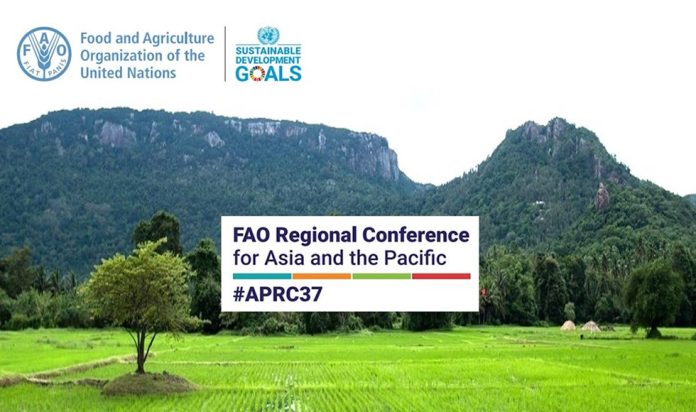
Ministers, delegations attend FAO regional conference in Sri Lanka

0
FAO Conference

Government ministers and delegations from 46 members of the United Nations Food and Agriculture Organization (FAO) have gathered in Colombo for the opening of the 37th ministerial session of the FAO regional conference for Asia and the Pacific (APRC37), the FAO said on Monday.

FAO Director-General Qu Dongyu will participate in the four-day forum and will make a statement to the conference on the second day of the APRC37. Sri Lankan President Ranil Wickremesinghe is also expected to speak on Tuesday, the FAO said in a statement.

According to the FAO, delegates will participate in several roundtable discussions, including lessons learned from the pandemic and its impact on food security and nutrition, and building resilience through agrifood systems transformation.

The Thirty-seventh Session of the Regional Conference for Asia and the Pacific (APRC) will be held as a high-level Ministerial in-person event in Colombo, Sri Lanka from 19 to 22 February 2024.

It will be preceded by the Senior Officers Meeting (SOM) to be held virtually from 31 January to 2 February 2024. The state of food and agriculture in the region; agrifood systems transformation; and solutions particularly for smallholders and family farmers will be discussed.

Maturity! Zari and Tanasha Donna Party Together in Uganda

0
Zari and Tanasha

Ugandan reality star Zari Hassan and Kenyan singer Tanasha Donna, both moms to Diamond’s kids, brought the fun to Zari’s All White Party in Kampala, Uganda. The recent meetup between contradicts earlier rumors of bad blood following a 2019 incident where Zari subtly shaded Diamond and Tanasha’s relationship. However, it seems like all that is in the past now.

Zari and Tanasha’s friendly interaction throughout the event suggested that any previous issues might have been resolved. The paparazzi caught them laughing and enjoying each other’s company, dismissing the rumors of animosity or tension between them. This spoke volumes about their maturity. Both ladies demonstrated that they could put aside differences for their children and show respect.

Interestingly, this reunion comes a couple of weeks after their children Tiffah, Nillan and Naseeb Junior met for the first time in Tanzania. Soon after, the toddlers, along with their dad, hopped on a private jet to Rwanda, where they attended an event in Kigali together.

45 Believers killed in two separate attacks in Arsi and Kellem Wollega zones, Oromia region

0

Addis Ababa – 45 people were killed in two separate violent attacks committed last week in Arsi and Kellem Wollega zones of the Oromia region. The attacks reportedly targeted believers, according to residents and officials.

In Shirka district of Arsi zone, residents say a total of 36 people were killed by unidentified armed men following attacks committed on 23 and 27 November 2023. One anonymous resident told VOA that the victims were Orthodox Christians and the attacks were identity based, adding that children and elderly women were among them.

Hailu Adugna, head of the Oromia Communication Bureau put the death toll from the attacks in Sirka district at 27, accusing the Oromo Liberation Army (OLA) of perpetrating the crime. The armed group committed the atrocity to retaliate against a recent government offensive in Chawaka district of Buno Bedele zone, the bureau head told VOA.

Spokesperson for the OLA, Odaa Tarbii however vehemently denied the accusation stating that the government is scapegoating the OLA after its forces committed widespread atrocities including killing civilians and burning houses between 24 and 27 November 2023 in the district.

In a separate incident, on 24 November 2023, 9 people were killed in Gidami district of Kellem Wollega zone. The victims were partaking in an overnight prayer at the Mana Hamo congregation of the Ethiopian Evangelical Church Mekane Yesus (EECMY) when they were taken by unidentified armed men, Lalisa Elias (PhD), Evangelism and Theology department head at the EECMY, told the BBC.

According to Lalisa, the 9 people, who were found dead two days later, included church leaders and organizers who were praying in preparation for the Sunday service, and none of them were involved in political activities.

Perpetrators of the crime haven’t been identified according to Lalisa, but unverified pictures of the deceased, piled up on one another, have been widely shared on social media over the past days with allegations that government forces committed the killing. Neither the Church nor the government issued an official statement on the killing in Gidami district.

Following the collapse of the second round of talkshostilities between OLA and the Ethiopian government have been escalating over the past weeks with civilians often caught in the crossfire.

On 20 November 2023, four civilians were killed amidst a fierce fighting between government forces and the armed group in Sulula Fincha district of the Horro Guduru Wollega zone, Addis Standard reported. Two days later, OLA affiliated’Arraata Biyyoolessa Oromiyaa‘ reported the killing of at least 25 civilians, allegedly in a government drone strike, in Chawaka districts of the Buno Bedelle zone.

Somalia Receives Donation of Grain from Russia

0

MOGADISHU – Somalia’s government on Thursday received a shipment of 25,000 tons of grain donated by Russia, state TV reported.

Russian officials handed over the donation to the Somali government at Mogadishu airport, promising that an additional 25,000 tons of grain will arrive from Russia later this year.

Speaking in Mogadishu, Russian ambassador to Djibouti Mikhail Golovanov said Moscow and Mogadishu signed in July an agreement that will alleviate about $700M of debt accumulated by Somalia since 1961 in an effort to revive Soviet-era diplomatic ties.

Latest Updates