Home Blog Page 93

NBK Woos NGOs to Grow Deposits

0
National Bank of Kenya

The National Bank of Kenya is targeting to grow its balance sheet with large deposits from non-governmental organizations by offering personalized services.

The bank’s chief executive Munir Ahmed said they will offer favorable exchange rates, free internet banking and business club for the sector while targeting the estimated Sh200bn in revenues from donations around the world.

“With over 81 per cent of their funds coming from foreign donations, this firms need special consideration in currency conversion,” NGO Coordination Board chief executive Fazul Mohammed said.

Dubbed ‘Thamani account’, the organizations will get favorable exchange rates, even as the bank grows its foreign exchange income.

The bank’s deposits grew from Sh77 billion in 2013 to 104bn in 2014 with foreign exchange income rising to Sh434mn from Sh309mn.

The sector has attracted controversy with government officials accusing a section of the NGOs for funding terrorism activities. Some have had their bank accounts frozen.

Ministry Seeks Cabinet Action Over Unsafe Buildings in Nairobi

0
Collapsed Building in Nairobi

An audit on the safety of buildings in Nairobi will be presented to the Cabinet next week.

The audit by the National Construction Authority (NCA) also covers buildings constructed on watersheds and recommends that they be demolished.

Acting Lands Cabinet Secretary Fred Matiang’i said once the audit is submitted to the Cabinet, a plan of action against the illegal structures will be announced and no one is to be spared in the planned demolitions.

In the audit the NCA has been conducting in the past three months, only 42 per cent of buildings were found to be safe to live in. Most, however, need minor adjustments while a few are write-offs.

The secretary of the Buildings Inspectorate of the Lands ministry, Moses Nyakiongora, said construction within five metres of the highest point of a river was considered encroachment into riparian reserves.

“Last week President Uhuru Kenyatta formed a Cabinet subcommittee for Lands and Housing, Interior and the Environment ministry after a building collapsed in Kisumu to curb this problem,” Mr Matiang’i said.

He added that the Cabinet secretaries from the ministries involved would issue a way forward once the NCA report is submitted to the Cabinet.

EIGHT BUILDINGS COLLAPSED

This year alone, eight buildings have collapsed, killing several people and injuring others.
In Nairobi, three buildings have collapsed in recent months in Roysambu, Huruma and Makongeni, leaving 15 people dead and scores injured.

Since 1996 more than 30 buildings have collapsed in Nairobi, Mombasa, Kisumu, Kiambu, Kisii, Meru and Narok.

The CS said officials who approved building plans on the riparian areas would also face charges.

Bobasi MP Stephen Manoti, whose Sh1 billion business complex on Mbagathi Way being built on a riverbank was stopped, said city county officials had given him a go-ahead.
The NCA also proposes that owners of buildings that have five floors but no lifts be forced to demolish the extra floors or install the service.

Owners of houses with minor defects, such as inadequate ventilation and lighting, have been given a month to fix the problems.

Owners of those classified as high-risk have been given two months to ask their tenants to move out and to demolish the buildings.

Mr Matiang’i, who was speaking at a forum on measures to curb the problem of collapsing buildings, said the government would “not be second-guessed”.

The NCA audit has already covered 1,600 buildings in Huruma, Kariobangi, Umoja, Githurai, Zimmerman and Kahawa West. Two blocks in Roysambu were brought down and several others in Umoja have been earmarked for demolition.

The Buildings Inspectorate urged tenants to look out for cracks and water leakages in their residences and vacate unsafe buildings.

Rwanda Standards Board, PSF feud could cost 500 jobs

0

Since April 2014, RBS has been pushing local gin manufacturers, a budding industry of about 10 players, to start packaging their products in glass bottles of volumes ranging from 250ml, 500ml, 750ml and 1,000ml.

The manufacturers currently use plastic bottles (polyethylene terephthalate) in packaging of the gin products mainly consumed by low income earners with the price of the smallest gin bottle costing less than Rwf400.

The standards body claims that the plastic bottles are poisonous, hence pose health risks to consumers. RSB has thus given the manufacturers until next month to have complied.

The claim that plastics are poisonous is contested by the manufacturers, who contend that RSB has no scientific evidence.

Also, at the centre of disagreement are claims by the industry players that RSB failed to involve them in the decision making process as required by law and is only pushing the controversial standard down their throats.

In essence, packaging in glasses means manufacturers have to abandon their current production lines which some producers claim, they allegedly acquired on the advice of RSB authorities, a claim the standards body vehemently denies.

According to RSB director-general Dr Mark Cyubahiro Bagabe, they couldn’t have sanctioned the manufacturers to use plastic packaging well knowing that it poses health risks to consumers.

Nonetheless, the gin makers say they are ready to eat a humble pie and comply with RSB demands on condition that they are given enough time…
Though German and other research results shows there can be serious side effect from using the plastic bottles, they still wants more time though they have already had a lot of time.

A sip from the water bottle sends hormones straight into the throat.
Water, gin and other fluids in plastic bottles appears to contain far more estrogen like substances than water in glass bottles. The effect on snails is very clear, say German researchers who believe that we are only seeing the tip of the iceberg.

Estrogenic substances slides right down the throat with drinking fluids in ordinary plastic bottles. The show trials conducted by researchers at Johann Wolfgang Goethe University in Frankfurt.

In their laboratory, the researchers Martin Wagner and Jörg Oehlmann examined 20 different of the most popular types of water bottles from store shelves, including both plastic bottles, glass bottles and tetrapak with plastic coating on the inside.

All plastics in the study were of the type polyethylene terephthalate (PET) and not the plastic type polycarbonate, which is found in, for example, baby bottles and contains the hormone-like substance bisphenol A.

The overall picture of the study showed that the water in plastic bottles had hormone-like effects. The conclusion came researchers with specific hormone sensitive mud nails type Potamopyrgus antipodarum that increases its reproduction hormone exposure.

The snails were placed in the various bottles and in both plastic bottles and tetra packs they produced on average twice as many embryos as in glass bottles.

Researchers: Plastic may be the main source of the hormone contamination.
The researchers have not analyzed for bottles containing certain substances, and the study also provided some results that are still missing explanation. For instance, a plastic bottle showed no sign of hormone levels, while an individual glass bottles showed signs of hormone-like substances.

Nevertheless, the German researchers have no doubt that the study is evidence that hormone-like substances from plastic packaging move into our drinking water and food.

“We have probably only identified the tip of the iceberg compared to the plastic wrapping as it can be a major source of synthetic hormone contamination of our food,” the researchers write in their conclusion.

Antioxidants in the bottle can be the culprit.
The question remains, what triggered the hormone-like effect, and lead author Martin Wagner guess even that there is a mix of different hormone-like substances. He also points to phthalates or other plastic materials that can provide estrogen-like effects or act as stops for the male sex hormones such as testosterone.

Across from Science News points endocrinologist Ana Soto of Tufts University School of Medicine in Boston that the estrogen-like effects can come from antioxidants.

Manufacturers of plastic bottles uses antioxidants in the bottles to make them resistant to sunlight. However, many antioxidants exists as phenolic compounds, and studies show that phenolic compounds to varying degrees can provide estrogen-like effects.

Endocrine disrupters are believed to be the main reason for men’s declining sperm quality, and that more and more boys are born with malformed genitals

Africa Embarks on Massive Expansion of Sea Ports

0

Compared to the volumes recorded at the dominating port terminals across the world, Africa’s leading regional port terminals lag way beyond – the Abidjan, Côte d’Ivoire; Dar es Salaam, Tanzania; Djibouti, Djibouti; Durban, South Africa; and Mombasa, Kenya do not appear to be major hubs on the world’s map because they record low capacities in regard to storage, maintenance and dredging capability.

“The steady increase in ship sizes in addition to growing cargo volumes has put pressure on cargo infrastructure and terminal capacities the world over, (and) in particular for African ports which have capacity constraints and poor transport infrastructure connectivity,” Danson Mungatana, the Kenya Ports Authority Chairman told a two-day East Africa Transport Infrastructure Conference held in Nairobi last August. Most African ports are characterized by inadequate infrastructure, poor harbor maintenance and insecurity, which puts African ports out of the list of top world’s seaports.

Capacity constraints

In a US-Africa Infrastructure Conference held in Washington, D.C in October last year by the Corporate Council on Africa, Vivienne Sequeira, the council’s Director of Infrastructure said “most of the ports are at full capacity” and most panelists raised an alarm about long delays at the ports. This situation if not addressed urgently is likely to become worse since according to the African Development Bank, port throughput in Africa will rise from 265 million tonnes in 2009 to more than 2 billion tonnes in 2040, while transport volumes will increase six- to eightfold, with a particularly strong increase of up to 14 times for some landlocked countries.

When you consider that commodities entering Africa from the rest of world come by ship the current port infrastructure’s inadequacy  to meet demand is of great concern and this has spurred African governments to undertake massive seaport terminals, canal and gateway construction projects in response.

Though most shipping port activity is concentrated in Egypt and South Africa, the East and West coasts of Africa do have a number of sea ports but capacity and efficiency is still a major concern in Nigeria, Ivory Coast and Ghana.

Competition for the position of preferred maritime gateway in East Africa has pitted Dar es Salaam Port in Tanzania against the Mombasa port in Kenya. Congestion at the Mombasa Port has at times caused some shippers to go to Dar es Salaam Port which is now unfortunately congested and is not efficient due to clearing issues at the custom. While the  planned Standard Gauge Railway that runs from Kenya to Uganda, Rwanda and Burundi could improve the situation, it is also necessary to have the ports expanded.

In the South of Africa, ports suffer from insufficient storage spaces and long container dwell time according to the Port Management Association of Eastern & Southern Africa (PMAESA), which is a regional grouping of ports in the two regions. PMAESA also adds that the ports continue to experience increased traffic and are not well served by access infrastructure.

Headwinds

Critics warn on a number of issues that must be observed in order to realize expected benefits on expansion of facilities. Of the most damaging would be misplacement of priorities where projects would be undertaken but fail to achieve benefits because other projects would have been better suited instead.  In addition with massive expansion of ports comes the need for government to invest additional funds to develop surrounding infrastructure.

Following massive developments that have come with the new Lekki port in Nigeria for instance experts warn that the government will face environmental problems as a result of population explosion around the area if infrastructure surrounding Lekki port such as roads are not expanded within coming two years. Egypt is also warming for a larger Suez Canal, in a massive expansion drive that will cost the exchequer US$4bn.

Nigerian Ports Authority (NPA) Senior Staff Association of Communication, Corporation and Transport (SSACCTAC) has warned that deep port construction projects being undertaken across the country could be ‘wasteful ventures and jumbo projects’ and instead said that what the country needed to do was to connect existing ports to railway networks. “We don’t need any other ports, apart from the deep sea port in Lekki, rather, we need to connect the ports to rail systems so that cargo can be evacuated on time,” President of SSASTAC, NPA branch, Comrade Omeiza Jimoh Umar  has said.

Kenya’s own Lamu port project may have its own issues as Tanzania and other countries have initiated similar projects. Competition among countries in regard to port activity is a reality that will dawn and may lead to low activity in some ports in the long run.

Projects such as construction of Bagamoyo Port and the Mtwara port project may not be good news since Tanzania and Kenya through the Mombasa Port have been serving the same landlocked countries. Kenya has been recording lower volumes from Rwanda and Burundi, while Tanzania has been recording improved volumes with time. Despite lower charges at the Mombasa Port, a survey in August last year revealed that expensive rail transport made the overall transportation of goods from Mombasa Port more expensive than transporting goods from Dar Port.

“Tanzania and Kenya are serving the same landlocked countries,” Janeth Ruzangi, manager of corporate communications for the Tanzania Ports Authority has said. “Firms are going to choose to use the facilities that will handle the goods with the most speed. It is natural that we have to work towards improving our port in order to attract these firms.” However, Kenya is seeking to counter the stiff competition by construction of deep berths at the Lamu Port but delays still continue to be a stumbling block.

Kenya’s ports are likely to loose further business from landlocked countries as Rwanda has partnered with Djibouti to facilitate the latter’s use of Port of Djibouti. In March last year, Rwanda was given a 20ha plot at the port in order to develop it, and reports indicate it could also get another 20ha if it develops the first one.

Uganda is also investing US$3b in a Bukasa Port project, an inland port expected to link to Musoma in Tanzania by water and to Port of Tanga by rail. Tanzania is planning to build a railway from Arusha to Musoma in expectation. Tanzania has also unveiled the Mwambani Port and Railway Corridor (Mwaporc) expected to join the Tanzania-Zambia Railway Corridor (Tazara) and Central Corridors in opening up the northern region. It is larger than the envisioned Lamu Port South Sudan Ethiopia Transport (Lapsset). Mwaporc project has recently received US$27bn by a private firm, Brookwoods Capital.

Delays

Like in other construction projects, delays have hit port expansion activity, and experts have warned that some planned expansions may only become pipe dreams. Completion of the envisioned and massive Lekki port in Nigeria was temporally delayed by funding issues, which has finally pushed the completion date from 2016 to 2018. The financial hurdle has now been overcome according to Nigerian Ports Authority’s (NPA) Chief Finance Officer Mr. Sandeep Parasramka, and this will pave way for construction. Even the complicated funding arrangements involved in these projects might lead to more delays as concessionaires might differ from time to time, like in the case of Lekki Port project.

Port of Walvis Bay in Namibia expansion project also failed to start due to “shareholder consultations” issues, indicating that internal investor issues could also hamper port expansion in Africa. The project, which would involve reclaiming land near the current port and construction of a new container port facility on the land, is yet to commence to date but tenders for related dredging contract were to be submitted by November 24 last year.

Other delays are likely to come from disagreement between stakeholders and related court cases. The Kenya Ports Authority chairman Mr. Danson Mungatana was last year September quoted as saying that the authority could incur massive losses if controversy surrounding identification of landowners for compensation was not ended soon. “Governments that are party to this project signed an agreement with the contractor for the job to start [in September] but this cannot happen because the various government agencies cannot agree on the list of landowners to be compensated,” he said. The project is yet to start off, with politics being at the center of controversy.

Even in Egypt where a project to construct a second canal to increase the capacity of the Suez, the spectre of delay looms both due to time as well as financial constraints. Dredging at the Suez Canal finally kicked off with 50 Egyptian companies expecting to undertake the US$4b project in an year’s time, using 4500 pieces of equipment. However, Haitham Awad, an engineering professor at Alexandria University alleges that costs are likely to skyrocket.

This has been supported by the reports that water was found at the drilling sites within days of starting the project, and this means more financial input and time are necessary to succeed with the dredging. “The cost of drilling underwater will exceed 10 times the cost of drilling in dry lands. The drilling site chosen was 400 meters from the Suez Canal, but it would have been better to choose a site between 8 and 10 kilometers (5 to 6.2 miles) away from the old canal,” Awad said. The project carries this challenge, amidst another one of lack of economic feasibility studies.

Industry experts have warned that the adventure by South Africa’s Transnet Port Terminals’ (TPT) to invest 71% of its US$2.8b planned investment may be a pipe dream and overly optimistic. Port expansion by TPT is expected to open opportunities as a result of growing demand. Zeph Ndlovu, general Manager of KwaZulu-Natal operations at TPT said “The challenge at the moment is to avail capacity before demand rises. We are unlocking that ahead of time.”

TPT owns 16 cargo terminals across the seven ports in the country. Expansion of the port in Durban has already faced opposition from the South Durban Community Environmental Alliance that is alleging negative social and environmental costs related to the project. The large resistance for a project that would lead to sub-Saharan Africa’s largest port is also coming up because it will involve mass displacement of families.

Yes port expansions will come with their benefits however,ther is a need to avoid the pitfalls of misplacement of priorities, delays due to funding, probable harmful competition since neighboring countries were under similar port expansion projects, and internal issues such as proper planning and politics that could deter development.

Fighting Terrorism in the Region: President Museveni’s Approach

0
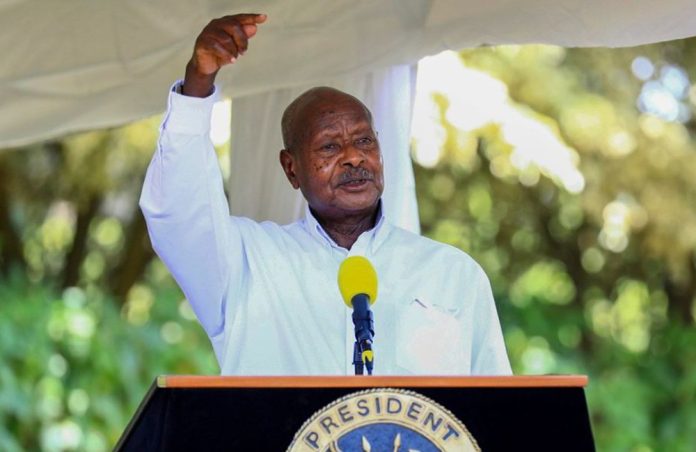
President Museveni

During the Madaraka Day celebrations, the President of Uganda who was a state guest to the celebrations gave a rousing speech in Kiswahili on how Kenya can defeat Al Shabaab. This eye rousing speech was heavily borrowed on his earlier opinion piece which he had written and circulated to newsrooms in the region. The opinion piece titled President Museveni gives rare insights on Al Shabaab which was published in Mail Guardian Africa

One of the things that caught my attention watching this fete was the mode of delivery used by the Ugandan President. The President used Swahili to deliver his speech. Normally Ugandan’s do not speak Kiswahili but President Museveni spent a couple of years in Kenya during the years of turmoil in Uganda. So, he is rather well acquainted with Kenya’s lingua franca but that said it shows the lengths the President went on to explain his philosophy of fighting terrorism to the common folk. His speech won a lot of admiration both online and offline and it does go on to cement his credentials as a former general and as a master strategist who led a guerrilla war on Idi Amin administration. It shows he still has it. One of the main problems with the fight in terrorism in Kenya has been both on the strategy (mostly the lack of it) and disconnect between the authorities and the citizens. The State has resulted in bastardizing the Somali community.

‘Foot in Mouth’ Strategies
After the Garissa terror attack, the administration scored a number of own goals such as the remarks by the Deputy President in which he was quoted indicating that the state wanted to close Dadaab Refugee Camp. The state has since revised its position on closing Dadaab but this was as a result of international condemnation and lobbying by the United Nations Office in Nairobi.

The other preposterous idea by the administration in Kenya was the building of a wall on the Kenya Somalia border. It looked like Kenya was going to join the leagues of Israel-Palestine, East-West Germany and US-Mexico wall barriers. In what is expected to be a 700 Kilometres stretch, the state seems to be going retro on its fight on Shabaab. It is a no brainer that this money would be better spent equipping and beefing up the security personnel along the Kenya-Somalia border plus fighting corruption along the border posts.
Kenya’s great wall as it has been ironically referred to, is well highlighted and analysed here

The other strategy which was pursued by the state immediately after the Garissa attack was the closure of Dahabshiil, the money transfer platform which mainly used to remit money to Somali by Kenyan Somalia’s and Somali’s in the diaspora. The rationale used by the state was that this was a conduit used to send money to Al Shabaab in Somali but this has been perceived by the Somalia community in Kenya as blanket condemnation of the whole community. This strategy would be akin to closure of M-Pesa platform in Kenya which is used to remit money to and from urban-rural areas.

Lastly, the state has clumped on the bank accounts of NGO’s which work or are associated with the Somalia community. Instead of the state cultivating a positive relationship with these NGO’s affiliated or working with the Somalia community. Especially to find out why youths are being radicalised and seek subtle ways and solutions of fighting this endemic, the state has embarked on a path of distancing itself with the Somali community. Intelligence is crucial in the fight against Al Shabaab and there is no way the state will win the war on terror is it seeks to alienate itself from the Somali community. As President Museveni noted;

The one factor that we must emphasize is intelligence – tactical (in a locality) and strategic (in the whole country and the region). – President Museveni

The above measures taken up by the state are not consistent with rationale and strategic thinking. One can only be hopeful that the Kenyan administration can be schooled in the ways of the general as espoused in the Madaraka speech of the Ugandan President which focused on strategic ways of dealing with the Al Shabaab. That is why this speech comes at a very crucial time and is most welcome. Also, the fact that the President Museveni chose to pass this message in Swahili was a strategic communication coup in my opinion. This is because he was able to reach many people in the republic. National celebrations are usually given ample airtime by the state broadcaster and are expected to reach all parts of Kenya.

The other outcome which is laid bare by the Ugandan President’s visit to Kenya and his fight on terror speech is the power play in the region.

President Museveni: First among Equals in the Region?
In my consented opinion, Museveni’s speech further indicates that Ugandan President is considered as first among equals by his peers in the East Africa region. President Museveni happens to be the senior most statesmen in the region. During his speech, he did indicate that he had called on his Kenyan counterpart, President Uhuru Kenyatta and advised him on how to tackle on the Shabaab menace.

This is especially important considering the events taking place in the region. Whereas Kenyan President seems to represent the future of the region and Africa in general and managed to attract a lot of pull with his ICC predicament. When it comes to matters of security, and as long as we have Al Shabaab menace it seems President Museveni will always be relevant. However, on economic frontier the Kenyan President seems to be taking the lead on these matters together with his Rwandan counterpart. The two seem to represent a dynamic duo which is keen on pushing on a developmental state paradigm to give relevance to their rule, democratic or otherwise.

The author of this piece is a blogger and a cultural practitioner in Nairobi. The views expressed here do not necessarily represent the views of FES

How 40-year Deal has Created Peace Haven in Volatile Region

0
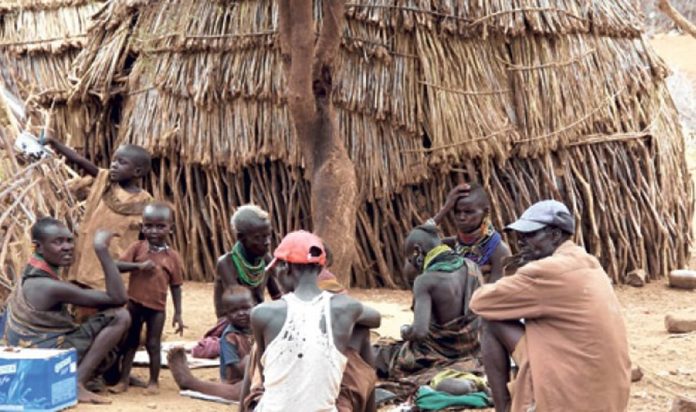
Turkana

A village in Turkana County remains a peace haven despite being in the midst of a region heavily hit by banditry.

Residents of Loima are basking in peace, thanks to a pact signed by pastoralists from Kenya and Uganda more than 40 years ago.

They have been enjoying the peace even as their counterparts in the eastern and southern parts of Turkana continue to suffer due to incessant cattle raids and bandit attacks.

Leaders from Turkana, Baringo, West Pokot and Samburu counties recently embarked on a peace caravan to urge residents to embrace peaceful coexistence and stop the attacks, which have claimed more than 100 lives in the past two months.

The situation is different in Lokiriama, situated on the Kenya-Uganda border, where the Turkana and Karamajong communities enjoy booming trade.
This is as a result of the Lokiriama Peace Accord signed in 1973 to promote peaceful coexistence among pastoralists in the two countries.

“We rarely encounter acts of lawlessness in the border region and those who engage in crime are punished under communal acts,” said Mr Mark Ajon Lokwawi, Lokiriama assistant chief.

At Lokiriama Village, some 120 kilometres southwest of Lodwar Town, is Lokiriama Monument, which signifies the peace agreement negotiated by elders and local administrators from Kenya and Uganda.

It is at this monument that guns, spears, arrows, traditional razor blades and knives were buried as a sign of peace to end animosity dating back to 1959.

The fights involved the Turkana and Pokot from Kenya, Tepes and Karamojong of Uganda, as well as the Merille, Nyangatom and Toposa from South Sudan.

“The fights took place between Mt Moroto in Uganda and Mt Loima in Kenya before elders initiated the peace agreement that has proved beneficial to all communities,” said Mr Emmanuel Imana, Turkana County peace ambassador.

The monument bears the names of the leaders, who facilitated the peace campaign.

KENYAN TEAM

The Kenyan team was led by then Turkana district commissioner David Olocho and six elders while the Ugandan team was represented by Matheniko chief Akwalem Tioko and five elders.

Since the monument was officially unveilled in 2003 by then Minister of Internal Security Chris Murungaru, pastoralists from Kenya, Uganda, South Sudan and Ethiopia have held annual commemorations at the site.

Among measures put in place to sustain the treaty are stiff penalties imposed on aggressors and compensation for anyone killed during an attack.

The Turkana community is set to pay compensation next week after two members of the Karamojong were killed near the Moroto border point.
Although the community is ready to pay the price, the Tepes from Uganda have been blamed for the killing.

“We are ready to defend the peace agreement at all costs, including paying compensation for the killings that we believe we were not responsible for,” said Mr Imana.

The two were killed as they were returning home from Lokiriama market.

Residents who spoke to the Nation said the killing has not interfered with cross-border trade and the prevailing peace in the region. “We will continue honouring the peace agreement,” said Mr Martin Owini from Lira, Uganda.

Mr Musa Odoch, a trader from Gulu, Uganda, said the peace pact has boosted cross-border trade and promoted intermarriages among pastoralist communities.

ILLEGAL ARMS

Currently, the government has embarked on registration of illegal arms in the North Rift to help end banditry.

Rift Valley Regional Coordinator Osman Warfa says there are more than 200,000 illegal arms in the region, which he blames for the upsurge of cattle raids and banditry.

Governor Josphat Nanok said many projects in Turkana, Baringo and West Pokot have stalled due to insecurity.

“The national government should release equalisation funds to help build schools, hospitals, roads, drill boreholes and establish agricultural projects in violence hotspots,” he said.

Fighting Graft in Kenya: The President’s War on Graft, Stepping Aside and Other Short Stories

0

Corruption is one of the vice’s that has been affecting the Kenyan Economy. If you ask me, I would say the rains started beating us after the implementation of the Ndegwa Commission. This commission was tasked to investigate whether public servants ought to be allowed to engage in business while still public officers. The commission found it worthwhile to recommend that civil servants should be free to engage in business activities provided they did that during their free time. It is from this point that I can authoritatively say that corruption in the public service raised its ugly head and there has been no turning back henceforth.

Although during the Kibaki administration, there was the initiative which was assented in to law where Civil Servants are required to declare their wealth. In doing so, it was thought that officials can easily compare the declared income and sources of income – if the wealth of a public official does not correlate with the sources of income then chances would be that the said official is dealing with some underhand dealings. Also, the crafters of this legislation thought that such legislation would prevent public officials from engaging in underhand dealings.
However, the main shortcoming of this legislation is that the wealth declarations have not been made public and as such public scrutiny does not exist. This renders the whole exercise useless.

2015: The Year of Fighting Corruption?
At beginning of this year, the President in his New Year’s speech addressed the issue of corruption and his administrations resolve to fight this vice. In this speech the president said;

Corruption destroys public trust, undermines democracy and the rule of law, and creates space for organised crime and other threats to security. Tackling corruption will see private sector grow, attract investment, and ensure benefits of growth shared by all Kenyan citizens.

Corruption remains a major obstacle to our national development agenda. Government processes will become more transparent.
In addition to the menu of policy and institutional frameworks, my Government will digitise public service transactions to make them more transparent and thereby eradicate the opportunity for corruption.

The New Year’s address to the nation typically lists the agenda of the president. It was worthwhile to hear the president speaking out loud against corruption and making this one of his agenda’s for 2015.

Fast forward to March this year, in his State of the Nation Address, corruption was one of the Presidents talking points. On this occasion the president stated;

When I spoke to the Nation on the eve of the New Year, I assured Kenyans that in 2015, my administration will deal firmly with corruption.
I have continuously engaged with all institutions charged with the responsibility to deal with corruption, and firmly expressed my expectations, and the people’s desire, that their respective mandates are executed robustly, urgently and without fear or favour.

I pledged my administration’s full support, as well as my own personal support, to any actions that will reverse the course of this cancer eating at the soul of our motherland. Rather than unite against this common enemy of our people, these institutions have elected to be mired in personal and institutional conflicts that have chipped away at their legitimacy and brought disrepute to the State.

From the commission charged with the responsibility in the fight against corruption, Parliament’s premier oversight committee, the corridors of justice, and the security organs charged with the safety of this nation, Kenyans are witness to the betrayal of their trust.

When our Treasury was processing our first sovereign bond, this country was forced to settle a foreign court judgement to pay shadowy entities 1.4 billion Kenya shillings. When I addressed the nation on this matter, I pledged that my government would do everything in its power to ensure that we recover all that was due to the Republic. From that moment, I took a personal interest and asked to be briefed on a regular basis of the progress on Anglo Leasing related investigations. My administration also supported the investigating authorities in obtaining support from a number of friendly foreign governments.

These investigations bore fruit. However, obstacles have appeared threatening the prosecution of the perpetrators. The Ethics and Anti Corruption Commission is now embroiled in infighting and finger-pointing, a state of affairs likely to cripple the investigative capacity of the institution with the likely outcome of subverting the course of justice. From reports I have received, I strongly believe that this is a further attempt to subvert the successful prosecution of the Anglo Leasing cases.
As I have indicated, constitutional officer holders, State Officers and every public servant, are bound by the values enshrined in our Constitution. They are required to uphold the highest standards of personal integrity in the discharge of their official functions.

In view of the oath of office that I took as the President of this republic, let it be known that today I draw the line. No one will stand between Kenyans and what is right in the fight against corruption and other monstrous economic crimes.
I have asked the Attorney General to liaise with the Council on Administration of Justice to focus on coordination within the Justice, Law and Order sector. The Council must ensure the efficient and speedy processing of corruption-related cases, including hearing such cases on a daily basis.

I direct the Attorney General to review the legislative and policy framework to ensure the effective discharge of Constitutional imperatives related to integrity.

The highlight on this occasion was the below directive to EACC;

Three weeks ago, I issued Executive Order Number Six (6) on Ethics and Integrity in the Public Service. In it, I directed any civil servants to get in touch with my Office should they receive any pressure to engage in unethical or illegal conduct regardless of the status of person pressuring them to do so. I want to reiterate this personal commitment, which is also provided for in the Constitution.

The latest report I have received from the Ethics and Anti Corruption Commission contains a catalogue of allegations of high-level corruption touching on all arms and levels of Government. It is the view of the CEO of the Ethics and Anti Corruption Commission that the institution and especially its Secretariat are under siege because of the nature of the cases they are currently investigating. I know that Parliament is seized of this matter and urge them to deal with it expeditiously.

(a) Today, I take the extra-ordinary step of attaching the afore-mentioned confidential report from the CEO of the Ethics and Anti Corruption Commission as an annex to my annual report on Values to Parliament.

(b) Consequently, I hereby direct that all Officials of the National and County governments that are adversely mentioned in this report, whether you are a Cabinet Secretary, Principal Secretary, or Chief Executive of a state institution, to immediately step aside pending conclusion of the investigations of the allegations against them. I expect the other arms of Government, namely the Legislature and the Judiciary, to do the same.

(c) The investigating authority must ensure that the Director of Public Prosecutions has received the subject files without delay.

(d) I also want to caution that this should not be an open-ended process, justice must be expeditious, as justice delayed is justice denied. Therefore, this exercise should be concluded within the next 60 days.

(e) Let me reiterate that it is not my place to determine the guilt or otherwise of any of the people mentioned in the said report or any other. However, the time has come to send a strong signal to the country that my administration will accept nothing less than the highest standard of integrity from those that hold high office.

After this speech the talk of town was to know the contents of the list of shame as it was referred thereafter. This list was made public shortly after when it was tabled in parliament. The names in this list included Cabinet Secretaries, Governors, Public Secretaries and even Ambassadors. The President gave a directive that those featured in this list ought to step aside to give way for investigations by the Ethics and Anti-Corruption Commission.

This was a big one by any standards and I could compare this to the corruption purge in the Judiciary undertaken in the first years of President Mwai Kibaki administration. This was led by Justice Aaron Ringera and mainly focused on removing the Moi era judges who were corrupt by all circumstances, since that was the entrenched culture by then. However, this purge had a political dimension as well, which were also getting rid of judges who were anti-NARC (then the ruling coalition).
Stepping Aside and Intrigues at the EACC.

As directed most of the high ranking government personalities featuring in the list of shame stepped aside following the President’s directive. However, most analysts felt that the said stepping aside was not enough – the listed individuals needed to resign. However, not in Kenya!

The other interesting phenomenon was the intrigues at the body responsible with investigating the corruption allegations and forwarding them to the Director of Public Prosecutions (DPP). The CEO and his deputy engaged in a public spat which was widely reported in the dailies. This was the public face of the body leading the war on corruption. There were feuds reported as well inside the commission. These fights took an ugly turn when parliament recommended to the president the investigations of the CEO and his Deputy. A tribunal was thereafter appointed by the President as enshrined in the constitution however the CEO and Deputy resigned and never faced the tribunal.

The 60 days given to the EACC lapsed May 24, 2015 and the EACC has forwarded some files to the DPP for his considerations as to whether to pursue charges against the said high ranking individuals.

So far no one has been arraigned in court yet but names of those to be arraigned in court are in public domain.

My Reading of this Whole Exercise – Fighting Corruption
The President seems to be genuinely interested in fighting graft. This is further emphasized by the joint communique issued by the President, British High Commission and Embassy of Switzerland. This communique was issued after the envoys of Britain and Switzerland visited the President at State House to show their support to the war on graft.

However there seems to be some complications even at the presidency level. The Deputy President’s name has been floated in a number of corruption allegations. Unlike the President, the DP has a history which traces back from his days as a youth winger in KANU during the Youth for KANU (Y2K) days. The President on the other hand is what you would call a Prince (being the son of the founding father). The two were joined in the hip by the ICC cases something that is no more for the president whose case was terminated for lack of evidence (in what CSO would consider hazy circumstances). The DP’s case is still ongoing.

An interesting distinction was in the way the Presidency acted once the list was made public. This list contained name of a PS based in the office of the Presidency based at State House and an aide to the DP. The President relieved the PS based at State House his duties while the aide to the DP stepped aside and has not been fired as of today. This speaks volumes that inside the administration there might be differences of opinion on how to fight graft. However, the President has stood by his DP on claims of corruption leveled against him. This would possibly long game on his part – most of the Kenyan’s believe that DP’s case at the Hague might result into a conviction which would relieve the President of his alliance but at the same time allow him to keep the empire both of them built.

In the coming weeks we can expect either a reshuffle of the cabinet or a filling in of the positions left by Cabinet Secretaries that are formally charged in court. The Public Service Commission on the other hand has been conducting interviews for possible replacements in PS’s dockets.

As to whether corruption will be brought to a grinding halt especially on the senior most levels, as far as I am concerned the jury is not yet out on this matter. But it will be interesting to see how this purge on corruption will end. Given the fact that the country is pursuing a number of big projects most of the replacements to these high offices will in a matter of fact be taking poisoned chalices.

Détente in Nairobi

0
Detente

In the run up to the 2013 General Elections in Kenya, Johnnie Carson, then Assistant Secretary of State and top ranking diplomat in charge of Africa quipped that choices have consequences. A phrase I think the State Department regrets in foresight. This is because this statement was one of the clarion calls used by the then presidential candidates Uhuru and Ruto to mop up support for their election to the highest office in land in Kenya.

At that point in time, both Uhuru Kenyatta and William Ruto were facing charges at the International Criminal Court for their actions and/or inactions (presumably) for the Post Election Violence that begot Kenya after the 2007 disputed polls.
Fast forward to today. The president’s case has been withdrawn by the prosecutor for lack of evidence and the stepping down of witnesses in some rather bizarre circumstances plus disappearance of others. The Deputy President’s case however is still on going at The Hague.

Once Uhuru Kenyatta was elected as president the west which had indicated before the elections that should the duo be elected as President and Deputy President, they would have what they referred to as ‘essential contact’. What that meant in the diplomatic language! However, this did not stop the newly elected president from discharging his duties.
In one of his best appointments to date in my opinion, the new administration tapped Amina Mohamed as the Cabinet Secretary for Foreign affairs. Previously, she had been an assistant Secretary General and Deputy Executive Director of United Nations Environmental Programme. Basically, she had a good understanding of how diplomacy works.

In the first year of the UhuRuto administration, we witnessed high level diplomacy from Kenya, where the country went full throttle to lobby the postponement of the then president’s case at the ICC. The African Union spearheaded the adjournment of the ICC cases at the United Nation’s Security Council which was unsuccessful.

However, the president in his first year in office visited key strategic countries, Russia and China, the two permanent members of the UN Security Council. China which has had substantial investments in the continent welcomed the president in Beijing with open arms. China, which also is an exponent of non-interference policy, seemed to take up the cue from African Union and they voted for the postponement of the cases when the matter came up for a vote at the UN Security Council.

Also, in the first year of his presidency the president seems to have developed a gravitas which unified the African heads of state and in the process his predicament brought some unforeseen fortunes in his doorstep. The president was seen by the rest of Africa as a new voice of the continent partly due to his excellent communication skills in front of the camera and also partly due to his rhetoric. The president also developed a very cordial relationship with President Paul Kagame of Rwanda. The two gentlemen have been preserved as the new generation of African leaders and in turn the continent a changing continent and thus taking up from the well thought former South African President Thambo Mbeki.

Détente in Nairobi

Enter the second year of Kenyatta presidency, the diplomatic offensive and his rising clout seems to have convinced the west in my opinion the funders of the court to drop the case and as such be able to engage with the president without any hindrances.

As was expected the case was withdrawn by the ICC prosecutor early this year. As a consequence, Nairobi has seen a fair share of high ranking western leaders. This train, if I may call it so has seen the former UK Prime Minister Tony Blair come to Nairobi. News of the Prime Minister being tapped to be an advisor of the president have percolated through, although how he got appointed and the remuneration he receives is still a mystery.

The other notable figure to come to Nairobi has been the former US President Bill Clinton. The former president was in town for his foundations business but he had time to meet the president at state house.

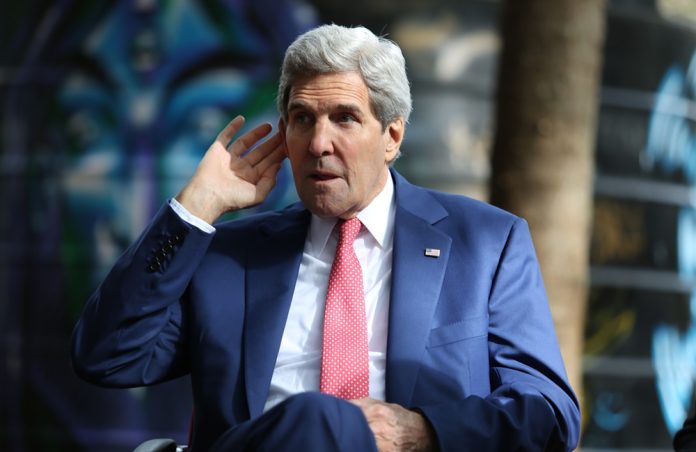
Then early last month word came in from the White House that President Barack Obama would be coming to Kenya in July this year. This initiated the recent visit by the Secretary of State, John Kerry who was in town to prepare for his boss’ visit and also try and offer support to Kenya in fighting terrorism. However, ultimately the recent détente can be attributed to the west seeing the enormous gains which has been made by China and as such America seems to be trying its fair share of remaining significant to the continent and also checking the Chinese influence in the region.

Burundi: The Arithmetic’s of Two Terms in Bujumbura

0

Two years ago, the celebrated columnist Charles Onyango-Obbo penned down an opinion piece in the East African titled, Why Burundi needs a sex scandal to be noticed. As expected this piece did not go down well in Burundi though it did ask an quintessential question;

What can Burundi do to get East Africa’s attention?

It seems the President of Burundi unwittingly and all for the wrong reasons decided to put Burundi squarely on the world map!

In the last couple weeks we have heard and seen disturbing news emanating from Burundi which has been precipitated by President Pierre Nkurunziza’s attempt to run for a third term. Though I am not an expert in the affairs of the great lakes region I have tried to keep myself a breast with the events leading to this situation, as most of us have been. This has been made much easier by my friends and YLF alumnae who are living this horrendous ordeal. We can only hope this situation ends soon so that they can go back to their usual life.

What is more baffling has been the response (mostly the lack of it) to this crisis from the neighboring countries and Africa at large. The current crisis in Burundi did not ‘just happen’ as one would put it, the writing has been on the wall for a considerable amount of time. The regional and continental bodies in which Burundi is a member have been passive to say the least in trying to address the unfolding crisis. Which makes one question the role and need of such institutions – the AU has an early warning mechanism yet its hands seem to be tied in proactively addressing situations such as this when they are unfolding.

Initially, when the issue came to the fore the African Union through its president announced on Twitter that it preferred the issue of the third term to be addressed through the constitutional court (the Senate had taken this matter to the court for interpretation). The African Union had come under considerable criticism especially on its response to the Ebola crisis in West Africa and this time it tried to show where it stood on this matter. However, as would have been expected, and the African Union should have known better! The administration in Bujumbura exerted pressure on the court and as such a ruling (unanimous for that matter) was struck in favor of President Pierre Nkurunziza.

As this was happening people have been fleeing the country, mostly relocating to Rwanda and Tanzania. It is only after reeling to the unfolding humanitarian crisis have the two countries come to the fore on this crisis. One might not be privy but perhaps the East African countries were trying to reach out to President Pierre Nkurunziza through diplomatic channels.
However, the quintessential question which begs is when does the sovereignty of a country end and the Responsibility to Protect (R2P) principle set in? Although Nkurunziza administration has cut down access to social networks, the citizens of Burundi like in any other country in the world have found means of by passing these restrictions.

Now one might ask why a president who has already served two terms would be interested in extending presidential term limits (through dubious interpretation of the constitution) so that he can serve another term. Aren’t there qualified people in his party who are a position to take the reins? If not why did he not mentor a successor?

Equally baffling has been the international community response to the crisis, case in point was the recent request by the United Nation’s Secretary General. The UN Sec. Gen. requested Uganda’s President Museveni to intervene in the ongoing crisis. In my concerted opinion, the UN Sec. Gen should have requested the Tanzanian president Jakaya Kikwete to mediate the crisis since the presidency of the East African Community currently rests with him. We have also seen the foreign affairs ministers of EAC going to Burundi and currently COMESA seems to have sent elder’s to access and possibly intervene.
The problem with this is, if there are many focal points trying to mediate then chances of success are minimal since the president might be bidding his time till it is too late. This concept is well laid down in Back from the Brink – the 2008 mediation process and reforms in Kenya.

This week the EAC heads of state will meet in Arusha to deliberate on the crisis in Burundi. One can only hope that the EAC leaders will come up with a road map to the current crisis in Burindi and that they are able to appoint one focal point to handle the crisis. If the EAC leaders are not in a position to convince President Pierre Nkurunziza to rethink on his candidacy the one can expert more volatile times in the great lakes region.

Recommended readings
1. An idiot’s guide to the Burundi crisis by Daniel K Kalinaki – The East African
2. Raila wants East Africa Community, world leaders to act on Burundi by Moses Njagih – The Standard

Xenophobia

0

Arachnophobia – the fear of spiders.
Claustrophobia – the fear of small/tight/enclosed spaces.
Xenophobia – the fear of foreigners.

However individuals who are afraid of spiders do not go around killing spiders, rather they avoid spiders. Equally, individuals who are afraid of small and tight spaces do not go around trying to eliminate the existence of small spaces.

Thus, xenophobia does not by definition imply the killing of foreigners. Yet, we continue to label this current wave of killings and murders in South Africa as xenophobic – and now the cooler term – “Afrophobic” attacks. Can we please just get real? What is happening in South Africa is genocide, a genocide fuelled by a deep-seated hatred for which no single foreigner is responsible.” – Lovelyn Chidinma Nwadeyi.

Lovelyn Chidinma Nwadeyi is a Nigerian. Born in Nigeria to two Nigerian parents and raised in Queenstown, Eastern Cape, South Africa by those same parents.

Lovelyn Chidinma Nwadeyi goes further to indicate in this post here that if we think what she is putting forth is too extreme, then we need to revisit what Genocide is, which happens to be the systematic/targeted killing of a specific tribe or race.

Is this not what is happening in South Africa? Is it entirely true that when you have a phobia, you avoid it. But what triggered the killings in South Africa, where even the sight of a pregnant mother or her baby doesn’t stir compassion? A little baby is burnt to death, alive. Its crying goes unheard, for it’s drowned out by the songs of hatred of its attackers. Trying to figure this all out, in my little head and trying hard not to feel the pain stabbing at my shrinking heart, my mind drifts away to the 1994 Rwandan genocide. We felt it here too, and we still do. But what really triggers these moves across the world?

Countries attacking each other, as are almost normal in the Asian countries. The world watched in shock as the Hutus hacked their fellow countrymen, the Tutsis in a bloody genocide in Rwanda. In a space of about 100 days, thousands of people; children, women and men were murdered in cold blood. Families were wounded and broken or separated as the United Nations intervened. In 2014, the BBC released an in-depth report on the Rwandan President, Paul Kagame which implied that he could have fueled the genocide. His former close associates confessed so, in the story feature titled Rwanda: The Untold Story.

Is it the same thing happening in S.A? Did the leaders of those people insight this genocide on foreigners? It is ironical, that while they kill their African brethren, their white oppressors walk free in the land. The closest they could go to attacking them, was bringing down Cecil Rhodes’ statue. Cowards! Or should I say; hypocrites! The leaders denied having any involvement, the Zulu king to begin with, for it started in his township, and then the S.A President … begged his citizens to stop the killings.

As Africans, we are heartbroken. We cannot believe the nation we stood with while they suffered apartheid could turn against us. We could work out a few assumptions, basing on a few of the facts;

The actual people who carried out the brutal killings were actually the poor, the minority. It’s very easy to stir whatever emotion you want from such a group of people, because they are desperate. That need doesn’t allow them to think through their actions. They are like a greedy person biting off more than they can chew, unaware they will soon choke on it. Who said what?

The Zulu king, who was said to have said something that triggered the killings, and later denied any involvement, could have actually said something, but without such intention. Well, you see, he being king means he lives off the contributions from his people. And these people are the poor majority. The really well-to-do usually do not just give away their hard earned wealth to anyone. Meanwhile, professional foreigners are coming in to the area and doing what brought them, earn the most they can. This leaves the indigenous people poorer and unable to contribute as much to the king. Probably somebody pointed it out to him and in a bid to advise his people, it sparked more fire than he envisioned.

We could go on and on. But what form of justice can undo this? Families across Africa have lost their beloved; some have lost the sole bread earners, in such a manner that they can’t even have their bodies given a proper burial.

With globalization, we trade and live as one. The world is one global village! We acknowledge that not all South Africans agreed to or participated in these xenophobic attacks. There is a reason this happened and we pray that the souls who started this and those who still think such levels of violence are a solution to their problems, find peace in other hearts and feel the love from across the world. May they be moved by the gravity of their mistake and seek reconciliation with their African brethren. God is for us all.

For God and My Country!

Excerpts used in this post from Lovelyn Chidinma Nwadeyi can be accessed on this link

Davis Wesley Tusingwire is a member of FESYLF (Uganda), you can follow him on twitter @w_tusingwire.

Latest Updates