Home Blog Page 92

Parents and Clerics Rebel Against Law Allowing Teen Sex

0

Parents, education officials and religious leaders are up in arms against a Bill that seeks to give children as young as 10 access to information on sexual matters.

The is being debated in the Senate and provides that the Health Cabinet secretary and the Reproductive and Child Health Care Board “shall facilitate the provision of adolescent-friendly reproductive health and sexual health information and education.”

The Bill also obligates national and county governments to provide contraceptives and family planning services, including contraceptive options, counselling, information and education.

The Bill was prepared by Wiper Democratic Movement nominated Senator Judith Sijeny further provides that the Board makes available confidential, comprehensive, non-judgmental and affordable reproductive health services to adolescents.

It defines adolescents as those between the age of 10 and 17.

Providing such information would not require the consent of the adolescent’s parent or guardian, according to the Bill.

Those who prevent adolescents from getting education, including their parents or guardians, would be fined up to Sh200,000 or jailed for three years if convicted.

The Bill defines reproductive health as a state of “complete physical, mental and social well being in matters relating to the reproductive system.

It however does not define “comprehensive sexuality education and confidential services.”

The Kenya National Association of Parents said it would oppose the Bill, (Reproductive Health Care Bill of 2014) saying it was wrong to expose children as young as 10 to sexual content.

“When we made our input to the Bill, we generally agreed that education on sexuality be taught to children but from the age of 14 because we realised most parents are not free to discuss sexuality with their children in this era of HIV/Aids. If they have gone ahead to lower the age to 10, then we totally oppose it as parents,” said the association’s Secretary-General Musau Ndunda.

“You cannot talk to a child of 10 on matters of sexuality, you will be exposing them to very dangerous information at a very early age.” The chairman of the Kenya Secondary Schools Heads Association John Awiti also criticised the Bill, saying teachers were ill-equipped to provide information on sexuality to their pupils.

“We should ask ourselves, are our teachers trained to handle such issues professionally? Because we may attempt to do it and come up with other undesirable consequences. Let teachers be trained how to handle the subject professionally,” he said.

Catholic Church’s John Cardinal Njue declined to discuss the Bill in detail, saying the Church was yet to take a stand on it. He, however, hinted that the Church would oppose the Bill if it advocates abortion.

“We are studying the contents of the Bill and we will come out with our stand shortly, but you obviously know our stand on abortion,” he said.

The church has consistently opposed abortion, maintaining that every human being, whether born or unborn, has a right to life.

The clause that seems to offend the church provides that a health professional, in consultation with the pregnant woman, may terminate the pregnancy if it is established that it endangers the woman’s life or health.

It further states that a pregnancy would be terminated only with the consent of the woman or in the case of a pregnant minor, with the consent of a guardian or whoever has parental responsibility over the minor. However, the best interests of the minor would be considered.

The Anglican Church of Kenya Mumias Bishop Beneah Salala accused senators of seeking to impose their views on Kenyans. He called for a nationwide debate before the Bill was enacted.

“Issues of reproductive health are matters that touch on families and that is why if we have to enact this Bill, let us have the input of many different people and not a few parliamentarians or human rights activists sitting in boardrooms and imposing laws on the rest of Kenyans,” Bishop Salala said in an interview with the Nation.
New Rules – No Visa No Entry to Kenya

0
Kenya Visa

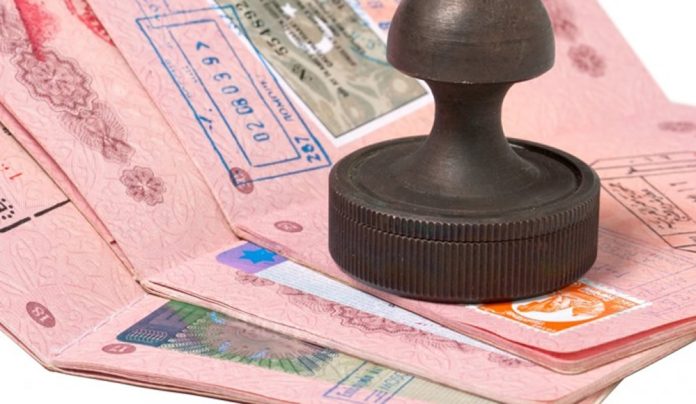
Major changes in Kenya’s visa policy will come into place from the 2/07/2015. Unlike in the past when many nationalities were able to get their visa on arrival in Nairobi or Mombasa, intending visitors will now have to apply for an e-Visa in advance, with processing days taking as much as a week. Upon vehement intervention from tourism stakeholders, a grace period has been extended but only for two months, during which time tourists and business travelers arriving at one of the two international airports can still get their visa on arrival, but effective September 1, this dual modus operandum will be scrapped and only the e-Visa process will be available.

The new method was only announced a short while ago and has caught many travelers and in particular tour operators and travel agencies abroad unaware. Many destinations brochures will now need re-printing as in most are European visitors told they can get their Visa on arrival at a cost of US Dollars 50, payable in cash. No more under the new rules when the payment must be made by credit or debit card.

It was not possible in the short period of time available to ascertain if the common East African tourist Visa, which presently allows entry into the three CoW countries of Uganda, Rwanda and Kenya at a reduced cost of just 100 US Dollars, must now also be purchased in advance via e-Channels (It is though listed on the ecitizen.co.ke as an option to apply for as well), as no such information was included in the regulations and guidelines published by the Kenyan immigration department.

Tourism stakeholders have sharply condemned the move, saying the week long processing period is excessive and prevents tourists taking a last minute decision to come to Kenya.

Last minute bookings, often at a significant rebate, are popular in Europe with passengers at times just turning up at the airport and in a game of potluck choosing from posters hang up by airlines or touroperators where to fly to, paying there and then and checking in for their flight.
And then there are those that fly into Kenya to continue to Tanzania or other places for safari’s and they will now have to have re-entry visa’s and Kenya will lose out on the income for these passengers in overland transit.
This include the business people that now have to wait for their visa to go and make in Kenya, they now have to wait, postpone or they might take their business somewhere else.

Among the documents required is a copy of flight Itinerary / Letter from travel agent on company letterhead confirming booking, now the problem is as well that most buy their airline ticket online and if you buy in advance and you don’t get the visa, you would have lost the money paid for the ticket and who will take that risk?
When you book a tour you have to pay within 48 hours, and it can take a week to get the visa, again who would risk losing thousands of USD because of that.

Either did Kenyan officials not think of these segment of travelers, the way bookings are handled or perhaps rather not know about it and with the new rules basically sending out the message that last minute travelers are no longer welcome in Kenya, and will inevitably lost business to more user friendly destinations for last minute bookers. It seams that they did not consult the tour operators, airline industry or other stakeholders in the industry.

One source from Nairobi close to this ‘action’ admitted that this was aimed to keep undesirables out of Kenya, in particular to stem the potential rise in arrivals of radicals from the UK, who may wish to join terrorist organisations similar to what many have done with ISIS in Syria and Iraq.

‘You must understand that the threat level from that side has gone up and up. We need those days to vet applicants and compare data base information with some of our western partners.(These data are in databases that is available in minutes not days, so this does not make sense, and there seams to be another reason for this.) This way we hope to catch those with links to radical groups and can deny them entry. Right now they just come, pay their Visa fee and melt away. One British was killed a few weeks ago when together with Al Shabab operatives trying to attack our barracks in Lamu. Therefore, we had to act and close that open door which existed and which we believe was used by radicals to infiltrate us. Now that you say it will keep a lot of real tourists out of Kenya, this will have to be investigated. We have to see if the process can be made faster. Anyway, people who have been here as tourists before and now arrive under new rules will be captured in our data base and when they come back in the future, their application could be as fast as a day’.

Considering that the country is still reeling from the yoke of the only recently lifted harsh anti travel advisories, it is clear that there is now a raging argument between tourism operators to let tourists in as it has been while security services will argue that even with the risk of one radical slipping through the net that one is one too many.

When Burundi a few months ago, equally at short notice, also demanded Visa in advance instead of granting them on arrival, visitor numbers into Bujumbura all but collapsed, leaving an already struggling tourism industry reeling from the fallout and being pushed to the wall due to lack of tourism numbers and revenues.

Seriously speaking though, tourism stakeholders are now urged to communicate these changes to their agents and operators abroad to avoid situation where paid up travelers will be denied boarding for their flight to Kenya, still thinking they get their Visa on arrival and yet, come September, will those doors be closed for good.

Visa Requirements (Visa can be applied for at: https://www.ecitizen.go.ke/)

  1. Passport( Not photocopy ) which is valid for at least six(6) months -To be submitted along with the application form.
  2. Completed (Filled in) Application form duly signed.
  3. Copy of flight Itinerary / Letter from travel agent on company letterhead confirming booking.
  4. Two Passport size photos, 2 inches by 2 inches (NB: Computer generated pictures are not acceptable, take a passport photo with camera and send directly to the computer for upload. A description is given on Ecitizen.go.ke )
  5. Visa Fees: (Money order / Cashier’s Cheque Only Payable to Embassy of The Republic of Kenya)
    • US$51.00 For Single Entry (Tourist/Visitor/Business),
    • US$110.00 For Multiple Entries (Tourist/Visitor/Business),
    • US$20.00 For Single Transit of not more than 3 days for travelers on stopovers in Kenya while proceeding to other destinations
    • US$100.00 East Africa,
    • Diplomatic, Official, Service and Courtesy visas will continue to be issued Gratis

Water Point ‘bank machines’ Boost Kenya Slums

0
Water ATMS Nairobi

Around the world people use bank machines to access cash: but in the Kenyan capital’s crowded slums, people now use similar machines to access an even more basic requirement — clean water.

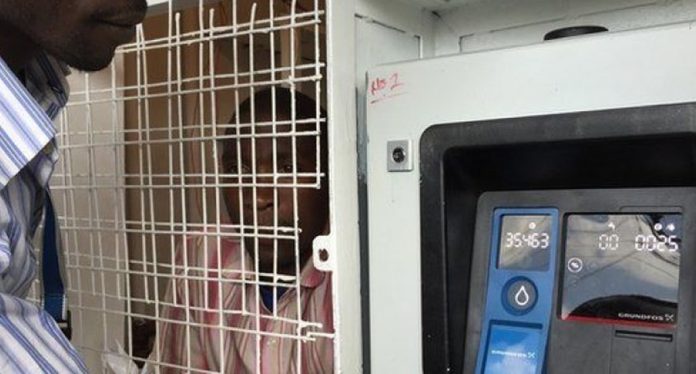
In a bid to boost access to clean water, four water dispensing machines have been installed in Nairobi slums that operate like cash machines — with customers able to buy affordable water using smart cards.

It has cut costs dramatically, and is helping improve health, residents say.

“It’s pure and good for cooking, and above all it is affordable,” said Peter Ngui, who runs a small street restaurant.

“I used to get water from far away, but this water system is closer to my place of work.” Previously people living in Nairobi’s cramped slums struggled to get clean water cheaply, and was pron to waterborn diseases.

Without water pipes or plumbing in the tin-hut districts, residents resorted to buying water from sellers who dragged handcarts loaded with jerry cans or oil drums into the narrow streets.

That water was often dirty, sometimes taken illegally from broken pipes.

But the new machines, installed by the government-run Nairobi Water and Sewerage Company (NWSC) and the Danish water engineering company Grundfos, allow people to purchase water directly — and far more cheaply — than before.

For the government, the machines allow them to make a profit, as water was previously stolen from them, with people cracking pipes to siphon off water to sell. For the people of the slums, the clean water provided is cheaper than that sold before.

“The project is commercially viable,” NWSC chief Philip Gichuki said. “Illegal water services are going to die off because residents are assured of good water quality.”

The new machines have made water up to six times cheaper. Previously, people would buy 20 litres of water (5 US gallons) in a jerry can from a street seller for three shillings, often from unreliable sources.

That price — the equivalent of 3 US pennies — was difficult for many slum residents who are unemployed or who only occasionally find work for $2 a day.

SAFE TO DRINK

Now the machines sell the same for just half a shilling — and the water is treated and safe to drink.

“We will have more and more people accessing water in a more dignified manner,” Gichuki said, standing beside one of the new machines, as long lines of women waited to fill cans full of water, heavy loads they must then carry back home.

“The people in the informal settlements will improve in terms of their health standards and they will also spend less money in terms of water services,” he added.

Residents load money onto the water smart cards at a nearby kiosk or via payments sent on a mobile phone — a common system of payment in Kenya, which pioneered the sending of cash via phones — then tapping into the machine how many liters they want to buy.

“This water project has come at a very good time, because if I have 50 shillings, I’ll deposit it onto my water-ATM card, and get water from this point for a whole month,” said Francisca Mbenya, who lives in capital’s vast Mathare slum.

The machines are operated by local residents — youth and women groups — who earn 40 percent of the profits from the water sales as an incentive to ensure they are kept running and the system is not vandalised.

Previously, pipelines were damaged when some people tried to steal the water. Now with the new machines and water points, the governments hopes there will be less reason to damage the pipes.

Lack of efficient sewerage and toilets mean water sources in the slums are often polluted, with diarrhoea common, while over 80 people died in a recent outbreak of cholera across the country.

Kenya’s slums earned a grim reputation for “flying toilets” — when people defecate into plastic bags due to a lack of other facilities, which are then hurled somewhere else into the shanty town. Conditions are improving however.

“I used to get water close to my home, but the problem was the hygiene level — right next to the water point was a sewer,” said mother-of-three Mbenya, as she tested the new water system. “This water point is clean.”

The United Nations say access to clean water is fundamental right, while the World Health Organization (WHO) guidelines say people need a minimum of 20 litres of water a day as a basic requirement.

Having clean drinking water is one of the United Nations Millennium Development Goals and it is thought that worldwide more than 700 million people still do not have access to it.

Ground Breaking of L. Turkana Wind Power Project Set for Thursday

0

The ground breaking of Lake Turkana Wind Power project is set for Thursday with President Uhuru Kenyatta officiating.

The first 90MW of electricity out of the total 300MW to be commissioned by September next year, while the rest to follow the following year.

“We have concluded a power purchase agreement with Kenya Power at a price of 8.42US cents per Kilowatt/hr,” Carlo Van Wageningen, director Lake Turkana Wind Power Project.

About 163 engineers both local foreign will implement the project together with 630 local workers.

The project will have 365 turbines on a 40,000 acre piece land in Turkana. The project has a 20 year power purchase agreement with Kenya Power.

Google in talks to join the Project

Google is reported to be in talks to invest in the largest wind power project in Africa.

A CNBC report quoting “people familiar with the situation” says the technology giant is interested in acquiring a minority stake in the Lake Turkana Wind Power Project.

The deal, if finalised, would likely be relatively small — in the tens of millions of dollars — but would be a vote of confidence about energy investment in Kenya.

It would also likely unlock an investment guarantee of up to $250 million (Sh24 billion) from the Overseas Private Investment Corporation, the US government’s development finance institution.

The Lake Turkana project, which will span 40,000 acres and produce 310 megawatts, will require more than $700 million (about Sh70 billion) to complete.

The private investors behind the project have already raised all the money they need so a Google investment would require one of the initial players to cash out early.

“The majority of the equity in the project is held by co-developers KP&P Africa, a group of Dutch and Kenyan businessmen, and power project specialist Aldwych International,” the CNBC report says. “Other financial backers include the governments of Denmark, Finland and Norway, and Vestas, the Danish company making the projects 365 turbines.”

Google has invested more than $2 billion (Sh194 billion) in numerous renewable energy projects in the United States and in 2013 put $12 million (Sh1.2 billion) into the Jasper solar power project in South Africa, one of the largest such installations in Africa.

The company provided no comment to queries about the proposed deal.

Mr Rizwan Fazal, a representative for the project, said: “Google is not involved in LTWP at present and LTWP has no agreement or understanding of any nature with Google.”

Commercial operations are scheduled to begin in October next year with 50MW and hit full capacity about seven months later.

Alta Wind Energy Centre (AWEC) in Tehachapi, Kern County, California, is currently the largest wind farm in the world with an operational capacity of 1,020MW. The onshore wind farm is owned and operated by Terra-Gen Power. Construction is underway to expand the wind farm’s capacity to 1,550MW.

The first five units of AWEC were commissioned in 2011. Two additional units were installed in the next year. The first unit consists of 100 GE 1.5-MW SLE turbines. The other six operational units are installed with Vestas V 90-3.0MW turbines.

Four more units were in various stages of completion as of mid 2013 at AWEC. The eighth and ninth units use the same Vestas turbines.

The last two units are being installed with GE 1.7MW and GE 2.85MW turbines. When combined, all 11 units of the wind farm will have 586 turbines in total.

Coast Tourist Bookings Looking Up

0
COAST TOURISM ON THE RISE

Tourist bookings from Europe are beginning to recover following the lifting of travel advisories by the UK government two weeks ago.

According to hoteliers at the Coast, British tourists have been making enquiries on reservations after their government lifted travel warning issued against Mombasa, Kilifi and Kwale.

On Monday, Nyali International Beach Hotel revenue manager Nabeth Mabeya said bookings from the UK market had started to pick up.

He noted that some British tourists had made bookings for the August to October period, with others choosing November and December.

“The lifting of the advisories was a positive move as we have started to record bookings from the UK market,” he said.

Mr Mabeya explained that insurance costs for holidays dropped after the advisories were lifted.

“The tourists who have made reservations appreciate that getting an insurance cover at the moment is inexpensive compared to when the travel ban was in place,” he said.

Mr Mabeya added that more German tourists are expected to visit the country following German holiday airline Condor’s plans to introduce flights from Munich to Mombasa.

He noted that the introduction of the new route will increase Condor’s flights from three to four per week since it already has three flights a week from Frankfurt to Mombasa.

RESUME FLIGHTS

In Diani, Baobab Beach Resort general manager Sylvester Mbandi said the hotel would start receiving Italian tourists from late July.

He added that an Italian chartered airline, Francorosso, is expected to resume flights from Milan to Mombasa beginning July 29.

Mr Mbandi said the hotel also expects to receive tourists from Germany and Britain between November and December.

“We have started to record bookings from Italy, German and Britain, but we expect the tourists to arrive late in the year,” he explained.

The hotelier said Baobab Beach Resort, which had been closed down for renovations in May, reopened on June 23 after international bookings from Europe started to trickle in.

Heritage Hotels chief executive officer Mohamed Hersi said the hotel group had also been receiving enquiries from the UK market after the travel advisory against Mombasa was lifted.

Tour firms Kuoni, Hayes and Jarvis and Somak, he added, have been enquiring about reservations for their clients.

“It was a step in the right direction, as leading tour operators from Europe are now interested in selling Kenya. Although the bookings are sluggish, we expect a rise in January and February next year,” he said.

SECURITY HAS IMPROVED

Mr Hersi, who is also the Kenya Coast Tourist Association chairman, said security had improved significantly in Mombasa Town, on the beaches and at Moi International Airport.

“The Kenya Wildlife Service has intensified patrols on the beaches, making them secure for sun seekers and swimmers,” he said.

Travellers Beach Hotel general manager Freddie Kiuru said the hotel expects repeat guests from Britain to jet in for holidays between August and December this year.

Severin Sea Lodge resident manager James Owiti added that the hotel had started to receive a few tourists from Germany.

He attributed this to support from German tour firms TUI, ITF, Jahn Reisen and Berg & Mere.

Danish Birth App Saves Lives in Africa

0

A Danish developed app for mobile phones teaches health workers in developing countries to help children into the world. The app makes the mobile phone into a kind of small handbook with practical information on how birth occurs, and what to do in various emergency situations – for example, if the mother is bleeding, or if the child is not breathing.

The whole thing is based as much as possible on graphics and small instruction animated movies, because the mobile app is supposed to be used especially by health workers in remote areas where education levels are low, and where it is difficult and expensive to reach with traditional training.

Doubles the competences
The Safe Delivery app has been scientifically tested in Ethiopia since 2013, in collaboration with researchers from the University of Copenhagen’s School of Global Health and the University of Southern Denmark, and the first results of the test is now available.

It turns out, the app strengthens the staff at the small health clinics significantly to make the right choices during and after birth. Health workers’ ability to handle a bleeding, and the ability to resuscitate a newborn, more than doubled after 12 months of use of the app. It writes the Danish NGO Maternity Foundation, which is behind the project and has ten years of experience with training health workers in developing countries.

It might seem contradictory that people in the world’s poorest areas can benefit from an app for smartphones. But Maternity Foundation sees great potential in using high-tech solutions in low developed countries:
Birth application

Nailonadege, aged 35, lies with her baby son, Francois Hollande on the maternity ward.

“There are more people in Africa who have a phone than there are people with access to water and sanitation – you talk about a revolution in mobile telephony,” says Anna Frellsen, director of the Maternity Foundation. She emphasizes the need for education is enormous:

“The global inequalities in maternal and child mortality is unacceptable. The tragedy is that we know that most of these lives can be saved with access to trained health workers. Therefore, it is important to exploit the technological possibilities to the limit with solutions such as The Safe Delivery App “.

Is now to be used in several countries
The finished version of the mobile program was officially launched on April 22, 2015 and it will now be made freely available to the health sector and NGOs in developing countries. Maternity Foundation will test and evaluate the app further, while deploying it across Africa. So far, an agreement with the Red Cross in Denmark and maternal health organization Marie Stopes International have been made, which will use the app in their health programs in Guinea and Tanzania.

The development of the app is funded by the initiative MSD for Mothers, The Obel Family Foundation, and through an international crowdfunding campaign on Indiegogo (www.indiegogo.com) (caremaker is another international crowdfunding site), which in autumn 2014 brought over 50,000 dollars.

TFDA Shuts Alcohol Brewers in Rombo

0
Banana Beer Moshi in Tanzania

Rombo district is in the spotlight for brewing alcohol that is alleged to weaken sexual abilities in men.

Tanzania Food and Drug Authority (TFDA) on Friday closed down seven alcohol producing plants in Rombo District because the drink weakens sexual ability of men and is said to be behind a number of failed marriages in the widely known district of Kilimanjaro Region.

The conditions under which the alcohol, made from banana, is taken widely by low income earners, do not meet professional category because the industries lack laboratories and operate in poor environments. TFDA officials said.

A  TFDA official, Barnabas Jacob, said the seven are among15 inspected industries and found not to meet criteria of producing alcohol.

He said the plants include Komba, Obama, Twiga, Pundamilia, Zebra, Iyembe, Kilimanjaro, Keni, Chuichui, Jogoo and Bingwa.

Drinking alcohol to excess can make good sex go bad.  Food and drug authority officials and alcohol experts affirmed in the district mid this week that “this is because alcohol reduces both men’s and women’s sexual sensitivity.”

“In both sexes, sexual response is reduced by regular and prolonged drinking,” the experts say.

“In men, alcohol can cause difficulties getting and maintaining an erection – while women may experience reduced lubrication, find it harder to have an orgasm, or have orgasms that are less intense,” the TFDA official said.

Many people mistakenly believe that alcohol is an aphrodisiac. However, over time too much alcohol can actually put a dampener on your sex drive, he noted, adding that drinking too much over an extended period of time can turn a temporary condition like ‘Brewer’s Droop’ into full-blown impotence.

Drinking can also cause damage if you are planning to have children. Women in Rombo district had earlier this month complained to have low infertility rates, attributing the agony to excessive drinking among men, according to the media reports.

The experts went on to explain that, women who drink over the lower risk guidelines can take longer to become pregnant and can suffer from menstrual and fertility problems.

Jacob said the plants faced serious legal measures if they did not comply with their instructions and that they will only be allowed to re-open if they followed required procedure.

Along with the stern legal measure, Jacob warned other industries in the region to follow laid down regulations, insisting that failure to do so would attract similar measures.

Felista Shine, wife of one of the owners, promised to make the necessary adjustments before they start business again.

Another owner who also faced the axe, Prosper Shao, said his plant was  closed down last year, but he said he believed that it now meets the TFDA conditions.

Prime Minister Mizengo Pinda early this week ordered his office to take appropriate action against Rombo District Commissioner Lemrise Kipuyo who said women in his area were hiring Kenyan men to satisfy them sexually since their husbands have turned to alcohol.

Pinda was responding to Rombo MP, Joseph Selasini (CHADEMA) who wanted the premier to apologise to Rombo men because they were humiliated by government officials.

We are Stuck with Aids Drugs, says Ugandan NMS boss

0
Antiretroviral Drugs HIV Aids

A delegation from Kasese District, which visited National Medical Stores (NMS) in Entebbe, was on Friday shocked to learn that stocks of HIV/Aids drugs were lying idle at NMS after respective districts failed to collect them.

“We are stuck with Antiretroviral drugs. We wonder where patients who had started the ART medicines are. Should we assume that they all died?” said NMS General Manager Moses Kamabare.

He said NMS have discovered that districts request for a lot of medicines during the procurement process but they collect less, leaving a lot of uncollected balance in the national stores.

Mr Kamabare added that NMS’ major challenge is not shortage of drugs but the space to keep them since a lot is ordered but never collected by the respective claimants.
“It can be understandable for other illnesses like malaria for the reduction of cases but not for HIV/Aids patients. We have a toll free line but we have never received any communication for any adjustments in drug supply,” he said.

Mr Kamabare said NMS faces challenges of absenteeism of health workers, theft and diversion of medicines and time of opening and closing the health centres.

“The monitoring of the performance of health workers is solely the responsibility of local governments. But because they have not done their part, health workers use it as a cover to claim that there are no medicines yet they are requisitioned every two months,” he said.
He denied allegations that NMS was dumping unwanted medicines to the health centres. He said they procure as per procurement plan and supply as per orders received.

Mr Kamabare said some administrators of health centres request for medicines that are not relevant to the common ailments in their health centres.

Kasese District health inspector, Mr Ericana Bwambale, who was part of the team, admitted that the health department was to blame for the mess in the health sector in the district.
“I admit that there have been gaps between the procurement process and orders. I have realised that everything is done during procurement plan but when it comes to orders, we do not reconcile the records hence leaving the NMS with either too much to procure or less depending on the situation at hand,” Mr Bwambale said.

He confirmed that some HIV/Aids patients had defaulted on the treatment, leaving ARVs idle in stores. He did not reveal why it was happening.

The team was led by Kasese deputy RDC Mr Aminadabu Muhindo.

However, when this newspaper sought for a comment from the acting Kasee District health officer, Dr Yusuf Baseke, he denied the allegations. He said the district had not had any shortfall of ARVs.

“Who told you that we lack ARVs? For us we order according to the number of patients we have in the district. If the NMS is complaining about the availability of ARVs, they should consult their records and see how much each district requested for and who never took according to the orders made,” he said.

Previous case

In 2013, an announcement was hung at Kilembe Mines Hospital noticeboard calling the Village Health Teams to trace ARV defaulters where more than 1,000 patients had missed their routine medicines.

Grand Return for Hollywood Star Lupita

0
Lupita Nyongo in Cannes

Did you want to meet Lupita? Or have dinner with the Oscar Award-winning actress? That will only be Sh10,000 per person or Sh100, 000 for a corporate table for an exclusive event to be held on Thursday, July 2, at the Villa Rosa Kempinski in Nairobi.

The actress, who seemed to give Nairobi and her Kenyan fans the snub, now appears set to make a grand entrance. Lupita  will arrive in Kenya in a week’s time to conduct a homecoming tour that includes activities that aim to uplift the Kenyan arts community as well as raise awareness on elephant conservation efforts in the country.

She will be the chief guest at an exclusive dinner bringing together conservationists, artists as well as the general public for an arts and fashion show by selected Kenyan designers and artists.

Besides her performances on the big screen, the actress is a red-carpet favorite who has been featured on the covers of People, Vogue as well as numerous appearances in some of the world’s most glamorous magazines.

Lupita will be lending her star power to conservation efforts in a radical departure from her glamorous assignments.

STELLAR CAREER

Lupita, whose stellar career began in Kenyan theatre, says she is delighted to be coming home.

“I am delighted to be returning home, especially with the added honour of being able to use this opportunity to help shine a global light on Kenya’s conservancy efforts,” she said.

Lupita began her reign as Hollywood’s new fashion darling when she picked up her Best Supporting Actress award for her tear-jerking performance in 12 Years a Slave.

The actress stunned in a baby-blue Prada gown, whose colour she called “Nairobiblue” that became a  trending subject on Twitter after Lupita enthused, “It’s a blue that reminds me of Nairobi, and so I wanted to have a little bit of home”.

She has consistently topped the best-dressed lists culminating in her proclamation as People magazine’s 2014 most beautiful woman and Glamour magazine’s second best-dressed, ahead of the Duchess of Cambridge and established Hollywood stars.

Her dress of choice to this year’s Oscars – the pearl-encrusted halter neck gown by Calvin Klein – was the subject of controversy when it was allegedly stolen and returned, with the thief claiming that the 6,000 pearls adorning it were fakes.

While Lupita’s red-carpet looks have not reflected her Kenyan roots, her date to the 2014 BAFTA awards was her mother, Dorothy Nyong’o, who wore an outfit by a Kenyan designer.

Lupita’s homecoming tour is being supported by a number of local brands, including Safaricom, Kenya Airways, Simba Colt Motors, African Heritage, Villa Rosa Kempinski and luxury bag manufacturer Lulea. She will partner with WildAid, whose mission is to end the sale of illegal wildlife artefacts such as elephant tusks and rhino horns.

“Our country’s elephants are a critical piece of the heart of Kenya and we need to take action now to save their population from the threats that continue to endanger their existence,” she said in a statement.

WildAid is an organisation that seeks to harness star power to reduce global consumption of wildlife products by persuading consumers and strengthening enforcement unlike most wildlife conservation groups that focus on protecting animals from poaching.

Lupita, who will be in the country starting June 29, will have a busy itinerary that will include an immersive mentorship session with young Kenyan students and artists on June 30 where she will discuss her acting career and provide tips on how to succeed in the arts.

Foreign Experts Think Kenya is in for a Negative Economic Surprise while Shilling Declines

0
Shilling and Economic Decline

The Central Bank of Kenya (CBK) Wednesday sold an unspecified amount of dollars directly in the money markets to support the shilling, which had weakened past the 99-units to the greenback.

At some point during trading today, the shilling had weakened to 98.95/99.05 to the dollar before the CBK intervened through sale of dollars directly to the market to stop further slide of the local unit.

The action by the CBK saw the shilling recover to close the day at 98.45/98.55, much stronger than 98.75/98.85-units the local currency closed trading on Tuesday.

The dollar is expected to strengthen globally as the Federal Reserve moves to start raising rates later in the year.

Forex analysts who spoke to Nation however, said the shilling is still vulnerable to the structural challenges in the economy and the exit of foreign investor portfolio from emerging markets due to lower returns to the high-return developed markets currently.

“Currently, there is a global portfolio re-alignment from the emerging markets, which are not doing very well. The portfolio is being re-aligned to the developed markets, which have better returns at the moment,” said a forex dealer at a commercial bank in Nairobi.

CONTINUE DECLINING

Analysts now see the shilling breaking the 100-unit level soon.

“Going forward, we expect the shilling to continue declining but at a much slower rate, breaking the 100-mark,” a forex dealer said.

Kenya’s current account deficit continues to worsen with imports growing at a much faster rate on the back of slowdown in export earnings.

Inflows from key sectors such as tea, coffee and tourism have also slowed down due low prices the commodities are fetching in the global market and the insecurity facing the tourism industry.

But not just that, but there are several signs that companies have problems with cash-flow and profits, as several major companies in sectors as retail stores, production and more have problems paying their suppliers. Some companies that are used to receive their payment within 1 to 3 month now waits 4 to 6 months to receive the payment, announced Kepsa on a resent meeting with foreign investors where they warned against giving credits.
Among other things are part of it a declining real estate market where prices now are falling for several reasons, we have before said the market will fall, and might even collapse with in a short time period. Prices for rentals to expats are already falling as a lot of foreign NGO’s, UN and other are re-posting positions to singles and not families, which now mean that where the society would have an income from whole families, now it is only from singles that uses less money. (No school children, no nanny, no driver, etc.)

Here the market for Tanzania and the growth is still staying high and even growing with a much higher percentage, and we find investors are more willing to invest in Tanzania, while investments in Kenya are on a decline. Investors we have talked with and that are considering to invest in Kenya, Uganda, or Tanzania, prefers Tanzania as country for investment, while Uganda and Kenya are side by side, simply said they say it is easier to get things through in Uganda, but there is less money, while they would rather do Kenya and the bigger market, but the extend of corruption keeps them out as it is to much, as everyone wants money, not just people in high positions but the middle and lower class as well, which makes it extremely hard for investors.
Some investors beleive that if it was not for bribery, Kenya would be much further and richer as a country, even on a higher level than South Africa.

Anticipated further weakening of the shilling comes on the back of the Central Bank of Kenya (CBK)’s decision to raise the Central Bank rate (CBR) by 1.5 percentage point to 10 per cent on June 9, to support the local currency from weakening further against the greenback.

President Uhuru Kenyatta is also yet to gazette Dr Patrick Njoroge as the CBK governor, more than a week after members of parliament ratified his nomination to head the banking sector regulator.

Latest Updates